



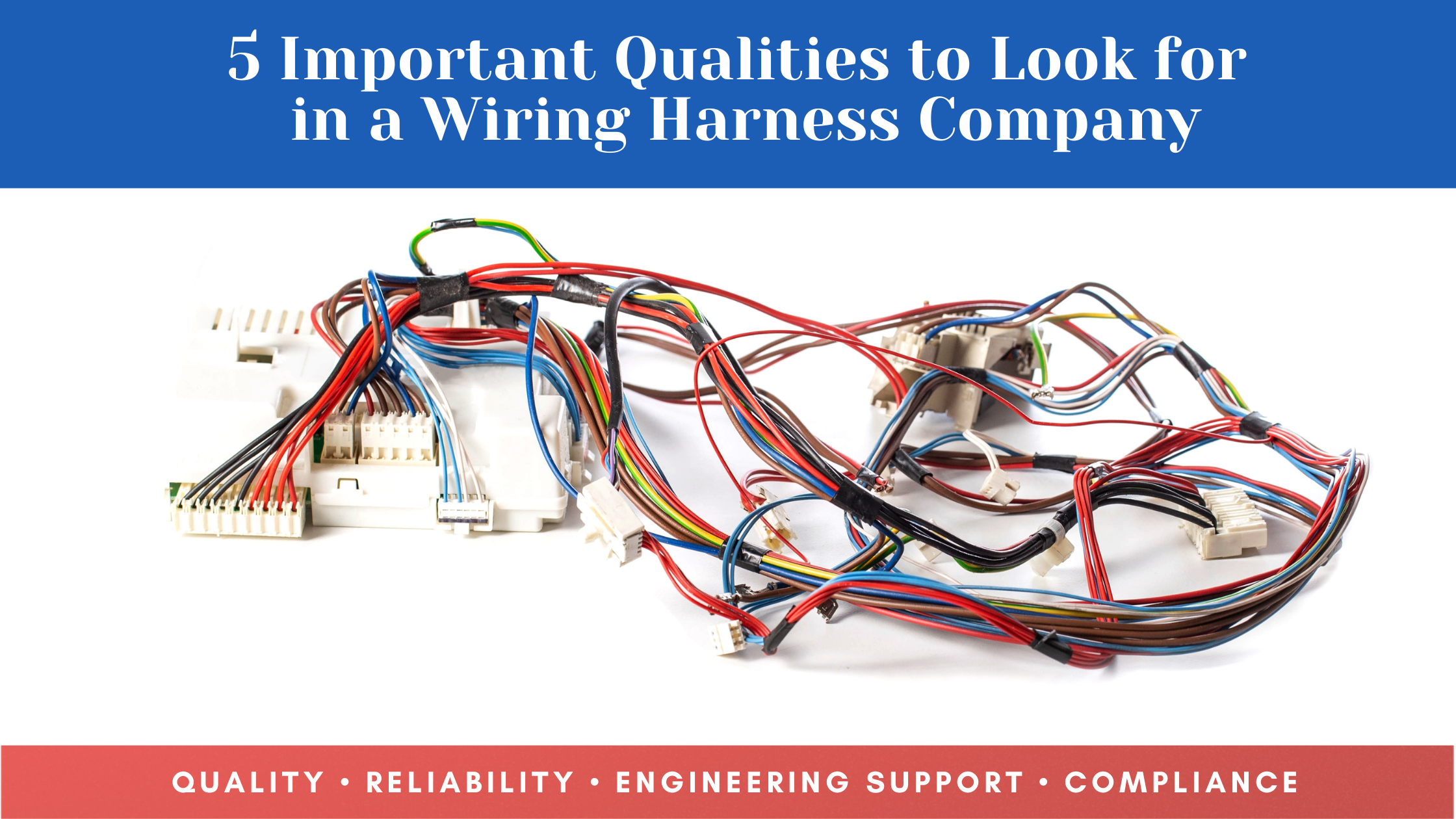
A capable wire harness manufacturing company should have controlled production processes, appropriate quality systems, testing capabilities, and practical manufacturing support based on customer requirements. If you are comparing suppliers, evaluating these five qualities can help you identify a reliable long-term partner.
What Should You Look for in a wire Harness Manufacturing Company?
A reliable wire harness manufacturing company should demonstrate five core qualities: strong quality controls, dependable delivery, flexible production capabilities, compliance with applicable requirements, and proven manufacturing expertise. Together, these factors help OEMs determine whether a supplier can consistently meet their product and production requirements.
1. Strong Quality Assurance Standards
Quality should be built into every stage of production rather than relying only on final inspection. A dependable wire harness company should have documented processes that help control variation from material preparation through final inspection and testing.
Key quality indicators include
- An established quality management system
- Defined production and inspection procedures
- Appropriate workmanship standards
- In-process inspections
- Electrical testing before shipment
- Material and process traceability
- Documented procedures for identifying and reducing defects
- Consistent quality controls across prototype and production builds
What Quality Standards Should a Wire Harness Company Follow?
The applicable standards depend on the customer’s product, industry, and specifications. IPC/WHMA-A-620 provides requirements and acceptance criteria for cable assembly and wire harness assemblies, including workmanship, materials, methods, and testing considerations.
Additional customer, regulatory, or industry-specific requirements may apply depending on the application. When evaluating a supplier, ask about its quality system, inspection procedures, traceability, and testing capabilities. These factors provide a better indication of production consistency than final inspection alone.
2. Reliable Delivery and Production Planning
A quality product is only useful when it arrives when the customer needs it. Delays in wire harness supply can affect downstream production schedules, particularly for OEMs that depend on consistent component availability.
A dependable wire harness manufacturing companyshould have processes for managing production schedules, materials, quantities, and customer requirements.
What to evaluate:
- On-time delivery performance
- Production planning and scheduling
- Material availability management
- Reliable sourcing of connectors, terminals, conductors, and protective materials
- Clear communication about production status
- Processes for managing changes in quantities or requirements
- Consistent lead-time expectations
Strong delivery performance generally depends on effective production planning and supply chain coordination. For OEM customers, this becomes especially important when requirements change between prototype, low-volume, and mid-volume production.
3. Flexibility for Prototype, Low-, and Mid-Volume Production
Not every OEM requires high-volume production. Industrial equipment, specialized systems, and other custom applications may require prototype builds followed by low- or mid-volume production. A capable wire harness manufacturing company should be able to support different production stages while maintaining consistent quality and process controls.
Important capabilities include:
- Prototype and pilot builds
- Low-volume production
- Mid-volume production
- Transition from prototype to recurring production
- Customer-specific configurations
- Flexible production processes
- Support for approved product revisions
- Consistent inspection and testing across different quantities
Can a Wire Harness Company Support Low-Volume Production?
Yes, depending on the supplier’s capabilities. Many OEM projects require smaller production quantities, particularly during product introduction or specialized equipment production. Before selecting a supplier, confirm its production capacity, minimum order requirements, lead times, testing capabilities, and ability to maintain consistent quality at the required volume. This flexibility can help OEMs work with one supplier as their requirements move from prototype development into recurring production.
4. Compliance With Applicable Requirements
Wire harnesses can be used in applications where electrical performance, safety, and environmental conditions are important. A credible wire harness company should understand the requirements applicable to the customer’s product and maintain appropriate production and quality documentation.
Compliance considerations may include:
- Applicable UL requirements or recognized components
- RoHS-compliant materials where required
- Customer-specific specifications
- Applicable workmanship requirements
- Industry-specific requirements
- Continuity testing
- Insulation resistance testing
- Dielectric testing
- Functional testing where applicable
- Documentation for customer reviews or audits
Not every project requires the same certifications or tests. Requirements should be established according to the customer’s product, operating environment, and applicable specifications.
Why Is Wire Harness Testing Important?
Testing helps identify potential electrical and connection issues before the finished harness reaches the customer’s production environment. Depending on the application, testing may include continuity, insulation resistance, dielectric withstand, or functional testing. When evaluating a supplier, ask which testing capabilities are available and how testing requirements are determined for each project.
5. Manufacturing Expertise and Technical Support
A strong wire harness company should combine practical manufacturing expertise with technical support. The supplier should be able to review customer requirements, identify potential production challenges, and provide manufacturability feedback before production begins.
Important areas of support include:
- Manufacturability feedback based on customer requirements
- Review of conductor, connector, terminal, and protective material requirements
- Manufacturing considerations for routing and termination
- Identification of potential production or assembly challenges
- Prototype support before production scaling
- Communication about production requirements
- Support for applicable testing requirements
- Consistent processes for recurring production
The goal is not simply to produce a harness but to establish a controlled manufacturing process that supports the customer’s specifications and production requirements.
What Information Should You Provide to a Wire Harness Company?
When requesting a quote or discussing production requirements, customers should provide as much relevant information as available, including:
- Drawings or specifications
- Wire and cable specifications
- Connector and terminal part numbers
- Circuit information
- Required quantities
- Testing requirements
- Applicable standards
- Customer-specific requirements
- Production timing or delivery requirements
Complete information allows the supplier to better understand the project and provide appropriate manufacturing feedback before production begins.
How to Evaluate a Wire Harness Company
Before selecting a supplier, OEMs can use this checklist:
- Does the supplier support your required production volume?
- Does it have documented quality processes?
- What testing capabilities are available?
- Can it support prototype, low-volume, and mid-volume requirements?
- Can it provide manufacturing feedback?
- Are materials and production processes traceable?
- Can it meet applicable customer and industry requirements?
- Does it have experience with your application?
- Can it maintain consistent quality for recurring production?
- Does it provide clear communication about production and delivery?
Comparing suppliers using these factors can provide a more complete evaluation than comparing pricing alone.
Choosing the Right Wire Harness Company for OEM Production
Selecting a wire harness company is a long-term manufacturing decision. The right supplier should provide consistent quality, dependable production, appropriate testing, and practical manufacturing support based on the customer’s requirements.
Stantek Contract Manufacturing provides wire harness and cable assembly manufacturing for prototype, low-volume, and mid-volume OEM requirements. Its capabilities support applications across automotive, aerospace, medical, marine, defense, and industrial equipment markets.For customers evaluating a wire harness manufacturing company, Stantek provides manufacturing feedback, production support, and testing based on customer requirements.
Early collaboration can help identify manufacturability considerations, production requirements, and applicable testing needs before production begins. For OEMs looking for a supplier for prototype, low-volume, or mid-volume requirements, evaluating quality, production flexibility, compliance, delivery reliability, and manufacturing support can help establish a dependable long-term manufacturing relationship.