



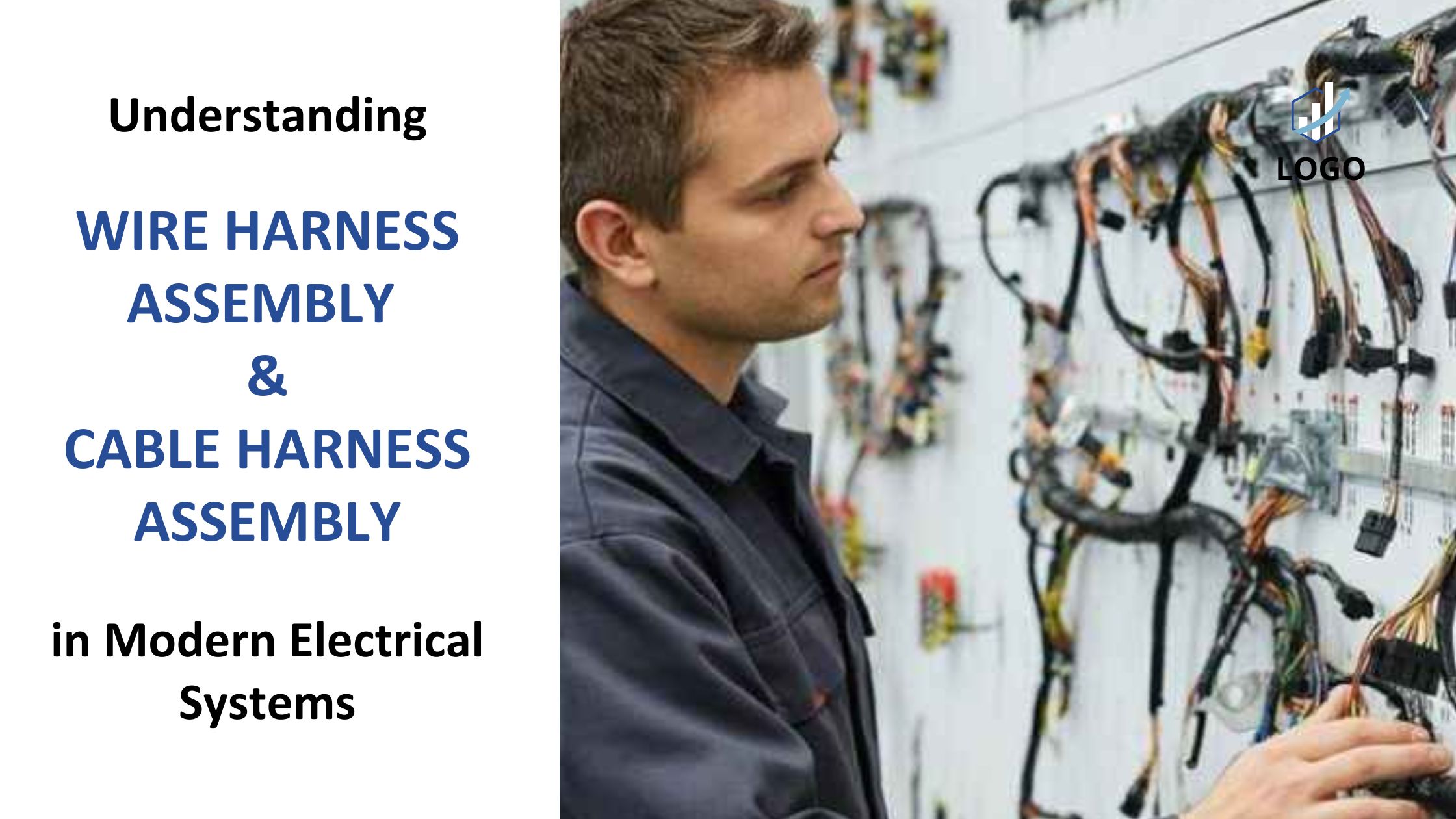
As modern electrical and electronic systems become more compact and functionally complex, managing internal wiring efficiently has become a critical engineering challenge. Poorly organized or unreliable wiring can lead to system failures, increased maintenance costs, and reduced operational efficiency across industries such as automotive, healthcare, industrial automation, and telecommunications. This is where wire harness vs cable assembly play a crucial role. These engineered solutions simplify complex electrical architectures by organizing, protecting, and connecting multiple conductors in a structured and reliable format. Together, they help reduce installation time, minimize wiring errors, and improve long-term system reliability.
In many industries, custom wire assemblies are used to support application-specific electrical connectivity requirements while improving routing efficiency and long-term durability. This post explores the key components of wire harness assemblies and cable assemblies, their manufacturing processes, major differences, and the factors that determine when each solution is best suited for specific electrical and electronic applications.
Components of a Wire Harness Assembly
A wire harness assembly is built from several carefully selected components as follows, each serving a specific function within the overall electrical system.
- Wires and Conductors: These are the primary current-carrying elements of the assembly. Each wire is selected based on voltage rating, current capacity, and the specific electrical requirements of the application.
- Connectors: Connectors interface the harness with external devices or system components. They ensure secure electrical contact and accurate signal transmission, both of which are essential to system reliability.
- Terminals: Terminals are metal contact points crimped or soldered to wire ends. They are inserted into connectors to establish a secure electrical path that completes each circuit within the assembly.
- Grommets and Strain Reliefs: Grommets protect wires at panel edges and pass-through points. Strain reliefs absorb mechanical stress before it reaches electrical connections, extending the service life of the assembly.
Many industries rely on custom wire assemblies to improve installation efficiency, maintain organized routing, and support consistent electrical performance in demanding environments.
Components of Cable Assembly
Cable assemblies consist of the following components that ensure stable electrical performance, environmental protection, and long-term operational reliability across demanding industrial and commercial applications.
- Cables and Conductors: Conductors transfer electrical power or signals efficiently throughout the assembly. Material selection, insulation quality, and conductor configuration directly influence electrical stability, flexibility, and long-term operational performance.
- Connectors: Connectors establish secure interface connections between devices and systems. Proper connector selection improves signal integrity, prevents accidental disconnections, and supports reliable performance in challenging operating environments.
- Insulation Materials: Insulation materials protect conductors from electrical leakage, environmental exposure, and short circuits. They enhance safety, maintain signal quality, and support dependable operation under varying temperatures.
- Shielding Components: Shielding minimizes electromagnetic and radio frequency interference that may disrupt signal transmission. Effective shielding improves communication accuracy, electrical stability, and overall equipment performance reliability.
- Strain Relief Components: Strain relief components reduce mechanical stress near connector termination points. They prevent conductor damage, improve cable flexibility, and enhance the assembly’s overall durability during repeated movement.
Manufacturing Process of Wire Harness vs Cable Assembly
Wire harness assembly follows a precise step-by-step process to convert individual wires into a structured and reliable electrical system for efficient performance and safety.
- Step 1: Wire Cutting and Stripping: Individual wires are first cut to specified lengths according to design requirements, and insulation is stripped from both ends to expose conductors for termination.
- Step 2: Terminal Attachment: Terminals are crimped or soldered onto the stripped wire ends to establish secure electrical connections and ensure stable conductivity within the harness system.
- Step 3: Routing and Layout Placement: Wires are arranged on a predefined layout board that replicates the final harness design, ensuring correct routing, positioning, and organized structure before assembly completion.
- Step 4: Bundling, Protection, and Testing: The routed wires are bundled using tape, sleeves, or conduit for protection, followed by electrical testing to verify continuity, insulation resistance, and overall circuit reliability.
Many manufacturers use custom wire assemblies during low-to-mid volume production to simplify installation processes and maintain consistent assembly quality across applications.
Cable assembly is also carried out in a structured step-by-step sequence to ensure reliable point-to-point connectivity and long-term durability in electrical applications.
- Step 1: Cable Cutting and Preparation: Cables are cut to required lengths, and outer insulation is carefully stripped to prepare internal conductors for proper termination and electrical connectivity.
- Step 2: Conductor Termination: Individual conductors are terminated using crimping, soldering, or overmolding techniques to form strong and stable electrical connections with connectors.
- Step 3: Connector Assembly and Configuration: Connectors are attached at cable ends, and in some cases, multiple cables are jacketed or organized together for added protection and application-specific configuration.
- Step 4: Testing and Quality Verification: Each cable assembly undergoes continuity testing and pull-force checks to ensure electrical accuracy, mechanical strength, and compliance with required performance standards before shipment.
Wire Harness vs. Cable Assembly: Key Differences
Both wire harness assemblies and cable assemblies serve critical electrical connectivity functions, but they differ significantly in structure, application, and complexity. The following table highlights the key distinctions between the two.
| Parameter | Wire Harness Assembly | Cable Assembly |
| Structure | Multiple wires bundled into one unit, often branching in several directions to serve multiple endpoints. | One or more cables terminated with connectors at each end, forming a direct, single path connection. |
| Complexity | More complex, incorporating multiple circuits, connectors, and routing paths within a single assembly. | Simpler in design, primarily serving point to point electrical connections with minimal branching. |
| Protection | Protected with tape, sleeving, conduit, and grommets, selected to suit the specific installation environment. | Typically protected by an outer cable jacket or connector overmold, suited for more targeted environments. |
| Installation | Delivered as a pre-built unit, reducing on site assembly time and minimizing the risk of wiring errors. | Installed as individual runs, well suited for modular or easily replaceable connection configurations. |
When to Use Wire Harness Assembly vs. Cable Assembly
While both solutions are designed to support reliable electrical connectivity, each serves a different functional purpose within modern electrical and electronic systems. Understanding when to use each solution helps engineers, OEMs, and procurement teams improve system performance, simplify installation, and reduce long-term operational risks.
When to Use Wire Harness Assembly
Wire harness assemblies are commonly preferred in the following situations:
- Complex Multi-Circuit Systems: Ideal for applications that require multiple electrical connections, branching configurations, and organized signal or power distribution within a single system.
- Space-Constrained Equipment: Suitable for compact equipment and control systems where organized wire routing helps maximize available installation space and improve serviceability.
- High-Volume Manufacturing Environments: Frequently used in automotive production, industrial machinery, and appliance manufacturing where pre-configured harnesses reduce installation time and improve assembly consistency.
- Applications Requiring Simplified Maintenance: Suitable for systems where organized wire layouts help simplify troubleshooting, speed up repairs, and improve overall serviceability during equipment maintenance.
- Applications with Frequent Routing Complexity: Preferred where wires must navigate around multiple components, panels, or moving mechanical assemblies while maintaining a clean and structured layout.
Many OEMs also prefer custom wire assemblies when applications require flexibility, application-specific routing, and reliable electrical integration.
When to Use Cable Assembly
Cable assemblies are commonly used in the following situations:
- Harsh Operating Environments: Ideal for applications exposed to moisture, chemicals, abrasion, vibration, heat, or outdoor conditions where additional protection is essential for long-term reliability.
- High-Speed Data and Signal Transmission: Commonly used in communication systems, medical devices, and electronics where shielding is necessary to maintain signal integrity and minimize electromagnetic interference.
- Direct Point-to-Point Connections: Best suited for applications requiring straightforward connections between devices, subsystems, or equipment without complex wire branching.
- Applications Involving Repeated Motion or Flexing: Frequently used in robotics, automation equipment, and portable electronic devices where cables experience continuous movement and mechanical stress.
- Systems Requiring Enhanced Durability: Preferred for military, aerospace, industrial automation, and heavy-duty commercial applications where cable protection and mechanical strength are critical.
- Installations Requiring Environmental Sealing: Suitable for environments where sealed connectors, overmolding, or ruggedized cable protection are necessary to maintain stable long-term performance.