



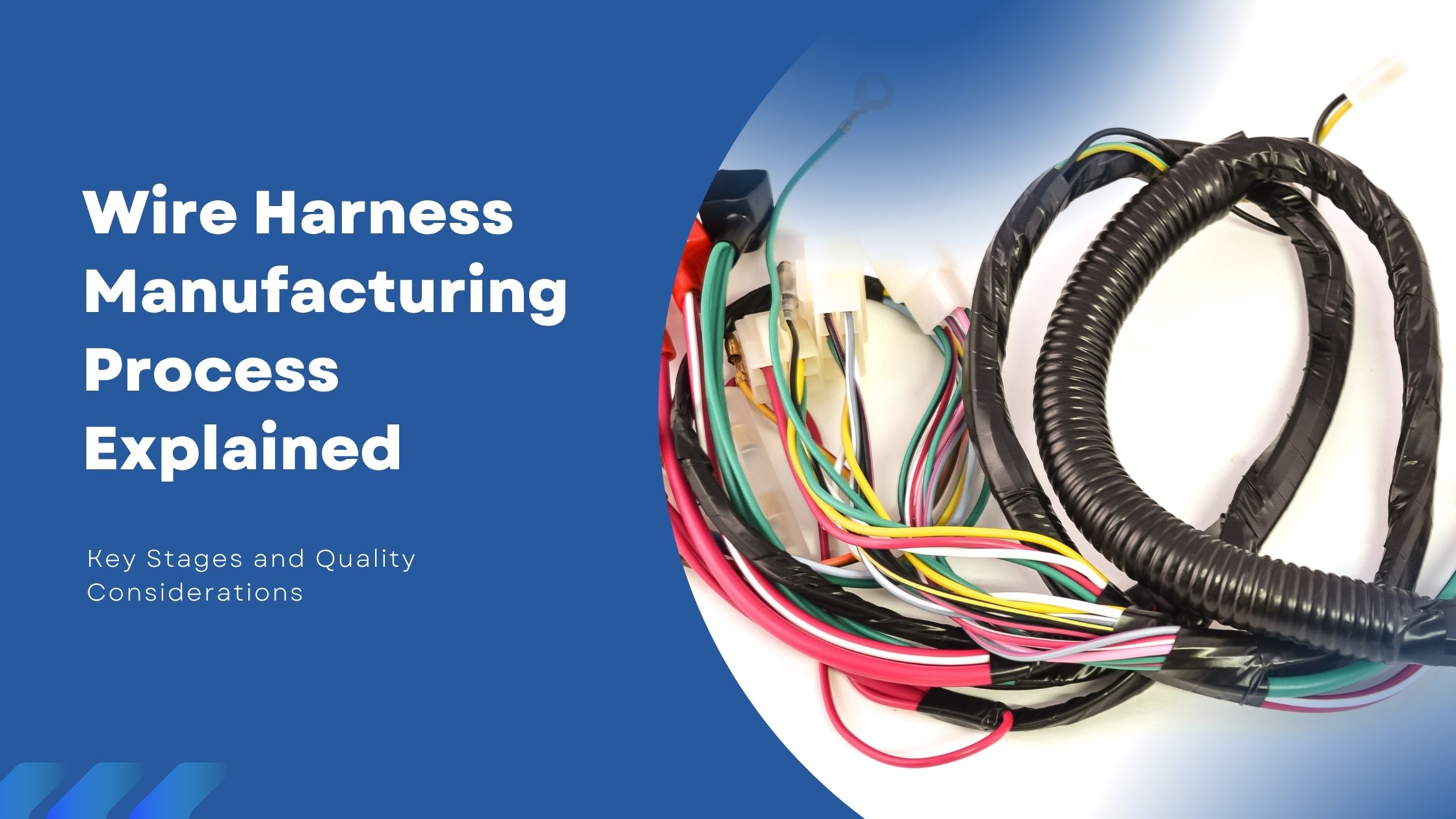
A wire harness is a structured assembly of electrical wires, terminals, connectors, and protective components designed to transmit power and signals efficiently within a system. Instead of loose or disorganized wiring, wire harnesses provide a secure and organized configuration that improves installation, simplifies maintenance, and reduces the risk of electrical failure.
As electrical systems continue to become more compact and complex across industries, the quality and precision of wire harness manufacturing have become increasingly important. The wire harness manufacturing process involves far more than simply bundling wires together. It requires controlled production stages, precise assembly techniques, and strict quality checks to ensure long-term electrical and mechanical reliability.
Are you intrigued to know more about wire harness manufacturing process? This blog explains the key stages involved in the process, highlights common manufacturing challenges, and outlines the quality considerations that directly impact long-term reliability and electrical performance.
Key Stages: Wire Harness Manufacturing
The wire harness manufacturing process involves multiple sequential stages, each requiring precision, consistency, and adherence to strict engineering specifications. From initial wire preparation to final inspection, every step contributes to the overall quality and functionality of the harness.
- Wire Preparation: This is the foundation of the wire harness manufacturing process, involving cutting wires to precise lengths, stripping insulation without damaging conductors, and labeling for identification. Automated equipment is often used to ensure consistency and accuracy. Errors at this stage can directly impact assembly efficiency and electrical performance.
- Crimping and Termination: This creates secure electrical and mechanical connections by attaching terminals to wires using controlled force and calibrated tools. The process must meet industry standards to ensure reliability. Poor crimping can result in signal loss, overheating, or system failure.
- Connector Insertion: Connector insertion involves placing terminated wires into connector housings according to design specifications and schematics. Proper pin alignment, color coding, and error-proofing methods help prevent assembly mistakes. Precision in this step is critical for maintaining circuit integrity.
- Routing and Assembly: Routing and assembly organize wires into the required layout using harness boards, while maintaining proper spacing and bend radius. Wires are secured with ties or clamps to ensure stability. This stage improves both functionality and installation efficiency in the wire harness process.
- Protection and Insulation: Protective materials such as braided sleeves, conduits, tapes, and heat shrink tubing are applied to shield the wire harness from environmental factors. These materials help protect against heat, moisture, abrasion, chemicals, vibration, and other conditions that could affect performance or durability.
- Testing and Validation: Testing and validation verify electrical performance through continuity, resistance, and insulation tests, often using automated equipment. This stage helps identify defects before final assembly. Early detection reduces rework and ensures compliance with specifications.
- Quality Inspection: Final quality inspection ensures the completed harness meets all design and quality requirements through visual checks, labeling verification, and dimensional accuracy. Traceability and compliance records are also reviewed. Only approved harnesses proceed to shipment.
Why Precision Matters in Wire Harness Manufacturing
Precision is fundamental to the success of any wire harness process. Maintaining strict control across each stage of the wire harness manufacturing process ensures consistent quality, safety, long-term reliability, optimal functionality, and compliance with engineering specifications. Here are some key reasons why precision is critical in wire harness manufacturing:
- Signal Integrity: Accurate assembly ensures reliable signal transmission by maintaining secure connections and minimizing electrical interference.
- Fault Prevention: Tight tolerances help prevent electrical faults such as short circuits, open connections, and signal inconsistencies.
- Mechanical Strength & Conductivity: Precision in crimping and termination strengthens mechanical retention and ensures stable conductivity over the product lifecycle.
- Stress Reduction: Proper routing and bundling reduce mechanical stress on wires, preventing insulation damage and premature wear.
- Design Fit & Integration: Controlled manufacturing processes enable better fit and integration within compact or high-density system designs.
- Production Consistency: High precision supports consistent quality across production batches, improving repeatability and scalability.
- Cost Efficiency: Reduced variability in manufacturing minimizes rework, material waste, and overall production costs.
- Standards Compliance: Consistent precision ensures compliance with industry standards and customer specifications, supporting audit readiness and acceptance.
Common Challenges in Wire Harness Manufacturing process
Wire harness manufacturing involves multiple complexities due to customization, precision requirements, and strict industry standards. Each challenge can directly impact product quality, consistency, and production efficiency if not properly managed.
- Complex Design Requirements: Wire harnesses are often highly customized, with intricate layouts and varying specifications that make standardization difficult. This increases the need for precise engineering and detailed documentation.
- Manual Assembly Errors: Many stages in the wire harness manufacturing process rely on manual labor, which introduces the risk of human error. Even small mistakes in crimping, routing, or insertion can affect overall performance.
- Consistency across Batches: Maintaining uniform quality across different production runs can be challenging, especially in high-volume or mixed-production environments. Process variation must be carefully controlled.
- Component Availability and Quality: Ensuring a steady supply of high-quality wires, connectors, and terminals is critical. Variations in component quality can lead to performance issues or delays in production.
- Regulatory Compliance: Industries, such as aerospace, medical, and defense require adherence to stringent standards and certifications. Meeting these requirements adds complexity to the manufacturing process.
- Scalability without Compromise: Scaling production while maintaining precision and quality is a key challenge, particularly when transitioning from prototyping to full-scale manufacturing.
Quality Considerations and Process Control in Wire Harness Manufacturing
Maintaining high quality in wire harness manufacturing requires strict adherence to defined process controls, standardized procedures, and recognized industry standards. Effective quality management ensures consistency, reliability, and compliance across every stage of the wire harness manufacturing process.
Critical quality considerations include:
- Standardized Work Instructions: Standardized work instructions and documentation ensure that every step in the manufacturing process is performed consistently and accurately.
- Industry Standards Compliance: Compliance with certifications such as ISO and IPC standards helps maintain industry-approved quality benchmarks and regulatory requirements.
- Real-Time Process Monitoring: Real-time monitoring of crimping and assembly parameters allows manufacturers to detect variations early and maintain process stability.
- Testing: In-process inspections and testing protocols help identify defects during production rather than after completion.
- Material & Batch Traceability: Traceability of materials and production batches ensures accountability and simplifies root cause analysis in case of defects.
- Continuous Process Improvement: Continuous improvement through lean manufacturing practices enhances efficiency, reduces waste, and strengthens overall process control.