



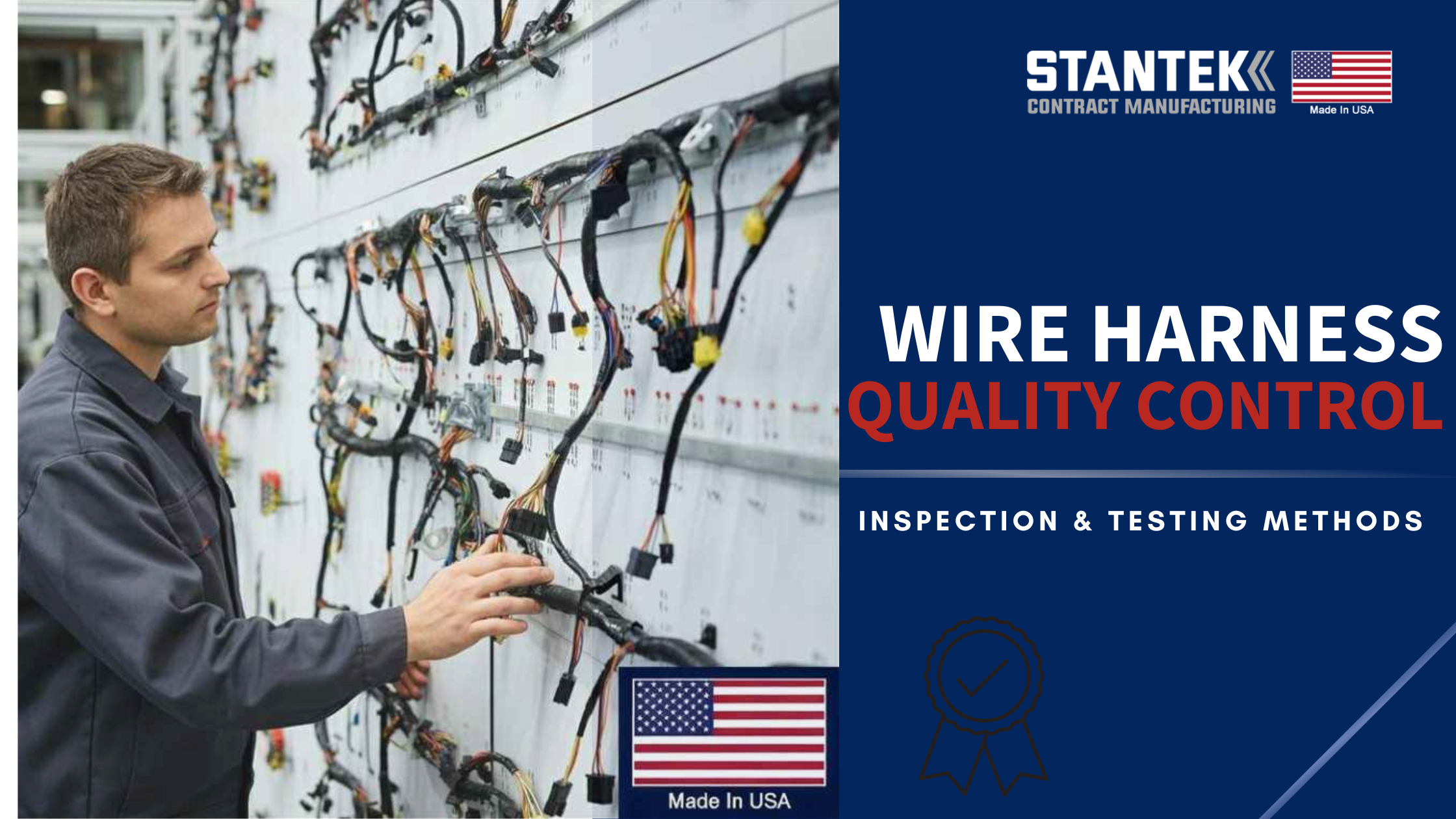
Electrical systems in marine vessels, industrial machinery, heavy equipment, and specialized vehicles depend on reliable wire harness assemblies for consistent power distribution and signal transmission. These assemblies integrate wires, connectors, terminals, and protective components to maintain secure electrical connections in demanding environments. As wire harnesses serve as critical electrical links, even minor assembly defects can affect system performance, reliability, and safety. Manufacturing issues such as incorrect wiring, improper crimping, insulation damage, or connector failures can compromise system performance and reliability. For this reason, comprehensive wire harness quality control processes are used to verify assembly accuracy, electrical integrity, and mechanical durability before the harness is placed into service. This post examines the key inspection methods, electrical testing procedures, and mechanical evaluations used to verify wire harness quality and help ensure reliable operation under demanding conditions.
Why Quality Control Is Essential in Wire Harness Manufacturing
Quality control plays a critical role in wire harness manufacturing as it helps identify defects, verify assembly accuracy, and ensure reliable electrical and mechanical performance. The following are some of the key reasons why quality control is essential.
- Preventing Electrical Failures: Electrical defects such as open circuits, incorrect connections, damaged conductors, or poor terminal crimps can affect system performance and cause power failures or signal interruptions. Quality control procedures help identify these issues through inspection and electrical testing before harnesses are integrated into larger systems.
- Ensuring Consistent Assembly Quality: Wire harnesses include multiple components, including wires, terminals, connectors, seals, and protective coverings, that require precise assembly. Inspection procedures verify proper routing, component placement, and compliance with customer specifications and manufacturing documentation.
- Improving Product Reliability: Wire harnesses operating in demanding environments may experience vibration, moisture, temperature variations, chemicals, and mechanical stress. Quality control testing helps confirm that assemblies maintain electrical integrity and mechanical stability under expected conditions.
- Reducing Maintenance Requirements: Quality control helps identify manufacturing defects before wire harnesses are installed, reducing the likelihood of premature failures that can lead to equipment downtime and maintenance. Reliable harness assemblies support longer service intervals and improved equipment availability.
- Meeting OEM Requirements: OEM buyers often require documented quality procedures to ensure consistent product performance. Inspection records, testing results, and process verification help demonstrate compliance with customer specifications and reliability expectations.
Wire Harness Inspection and Testing Methods Explained
Wire harness quality is verified through a combination of inspection and testing procedures performed throughout the manufacturing process.
Inspection Methods
Inspection procedures help identify defects, verify component placement, and ensure wire harness assemblies meet customer specifications before integration.
- Visual Inspection: This inspection evaluates the physical condition and workmanship of a wire harness assembly. It helps identify visible defects and confirms proper installation of components. Visual inspection typically verifies:
- Wire routing and positioning
- Connector placement and orientation
- Terminal alignment
- Labeling accuracy
- Insulation condition
- Protective sleeves and coverings
- Presence of required components
- Dimensional and Assembly Inspection: This inspection verifies that wire harness assemblies match the required physical specifications. Accurate dimensions and proper component placement are essential to ensure compatibility with the final equipment design. This inspection verifies:
- Overall harness length
- Branch locations
- Connector positions
- Wire routing paths
- Component placement
- Protective covering installation
By confirming physical accuracy during manufacturing, dimensional inspection helps prevent installation issues and supports proper system integration.
Testing Methods
Testing procedures evaluate the electrical performance, mechanical strength, and environmental durability of wire harness assemblies to confirm reliable operation under application conditions.
- Continuity Testing: This testing method verifies that electrical circuits are correctly connected and follow the specified wiring design. Each circuit is checked to confirm proper current flow and identify potential issues such as:
- Open circuits
- Incorrect wiring connections
- Terminal connection issues
- Poor electrical contact points
- Assembly errors
- Electrical Verification Testing: This testing evaluates the overall electrical integrity and performance of a wire harness assembly. These tests help confirm that the harness meets specified electrical requirements and operates reliably under expected conditions. Common electrical verification methods include:
- Insulation Resistance Testing: Evaluates the resistance of insulation materials between conductors to detect leakage currents, insulation damage, or potential short-circuit risks.
- Dielectric Strength Testing: Verifies that insulation materials can withstand high voltage without breakdown, ensuring electrical safety and reliability.
- Circuit Verification: Confirms that electrical circuits are correctly assembled and function according to the specified wiring design and requirements.
- Pin-to-Pin Testing: Checks individual connector pin connections to verify proper wiring paths and ensure accurate signal and power transmission.
- Pull Testing: This testing evaluates the mechanical strength of wire-to-terminal connections within a harness assembly. Pull testing helps verify that terminals remain securely attached when exposed to pulling forces, vibration, or movement during equipment operation. This testing method helps assess:
- Terminal retention strength
- Crimp quality
- Wire-to-terminal connection durability
- Resistance to mechanical stress
- Vibration and Mechanical Durability Testing: Wire harnesses used in heavy equipment, industrial machinery, and mobile applications are often exposed to continuous vibration and mechanical stress. This testing helps verify that the harness can withstand these operating conditions while maintaining its electrical and mechanical integrity. Mechanical durability testing typically evaluates:
- Connector retention
- Wire routing stability
- Strain relief performance
- Resistance to repeated movement
Vibration testing simulates real-world operating conditions and helps identify potential weaknesses in connectors, terminals, and protective components.
- Environmental Testing: Environmental testing evaluates wire harness performance under exposure to moisture, dust, temperature variations, chemicals, and corrosive conditions. Common environmental evaluations include:
- Temperature Cycling Testing: Temperature cycling exposes harness assemblies to repeated high and low temperature changes to evaluate material stability, insulation performance, and sealing effectiveness.
- Water and Dust Resistance Testing: Ingress protection testing evaluates the ability of harness assemblies to resist moisture and particulate exposure. These evaluations help verify protection against environmental exposure.
- Salt Spray and Corrosion Testing: Salt spray testing assesses the corrosion resistance of connectors, terminals, and protective materials when exposed to salt-rich environments. This testing is commonly used for marine and outdoor applications where corrosion resistance is critical.
- Temperature Cycling Testing: Temperature cycling exposes harness assemblies to repeated high and low temperature changes to evaluate material stability, insulation performance, and sealing effectiveness.
Quality Documentation and Process Verification in Wire Harness Manufacturing
Effective wire harness quality control extends beyond inspection and testing procedures. Proper documentation and process monitoring help manufacturers maintain production consistency, verify compliance with requirements, and support continuous quality improvement throughout the manufacturing process. Manufacturers typically maintain detailed quality records, including:
- Inspection Reports: Inspection reports document the results of visual, dimensional, and assembly inspections performed during production. These records help verify that harness assemblies meet specified design requirements and identify any issues requiring corrective action.
- Electrical Test Records: Electrical testing records provide verification of continuity, insulation resistance, dielectric strength, and other electrical performance checks. These results help confirm that wire harness assemblies meet required electrical specifications before shipment.
- Production Traceability Records: Traceability records track materials, components, production stages, and inspection history associated with each harness assembly. This information supports quality tracking and helps manufacturers quickly identify and address potential production issues.
- Process Verification Data: Process verification data helps ensure that manufacturing procedures are consistently followed. Monitoring assembly processes, testing methods, and quality checkpoints supports repeatable production outcomes and continuous improvement.
Need a Reliable Wire Harness Manufacturing Partner?
The performance and reliability of every wire harness begin with precision manufacturing and rigorous quality control. Stantek provides custom wire harness assemblies for marine, industrial, and heavy equipment applications, combining manufacturing expertise with quality-focused production processes. Contact the Stantek team to discuss your project requirements. We provide initial design support, rapid prototyping, and contract manufacturing of custom wire harness assemblies built to your specifications.