



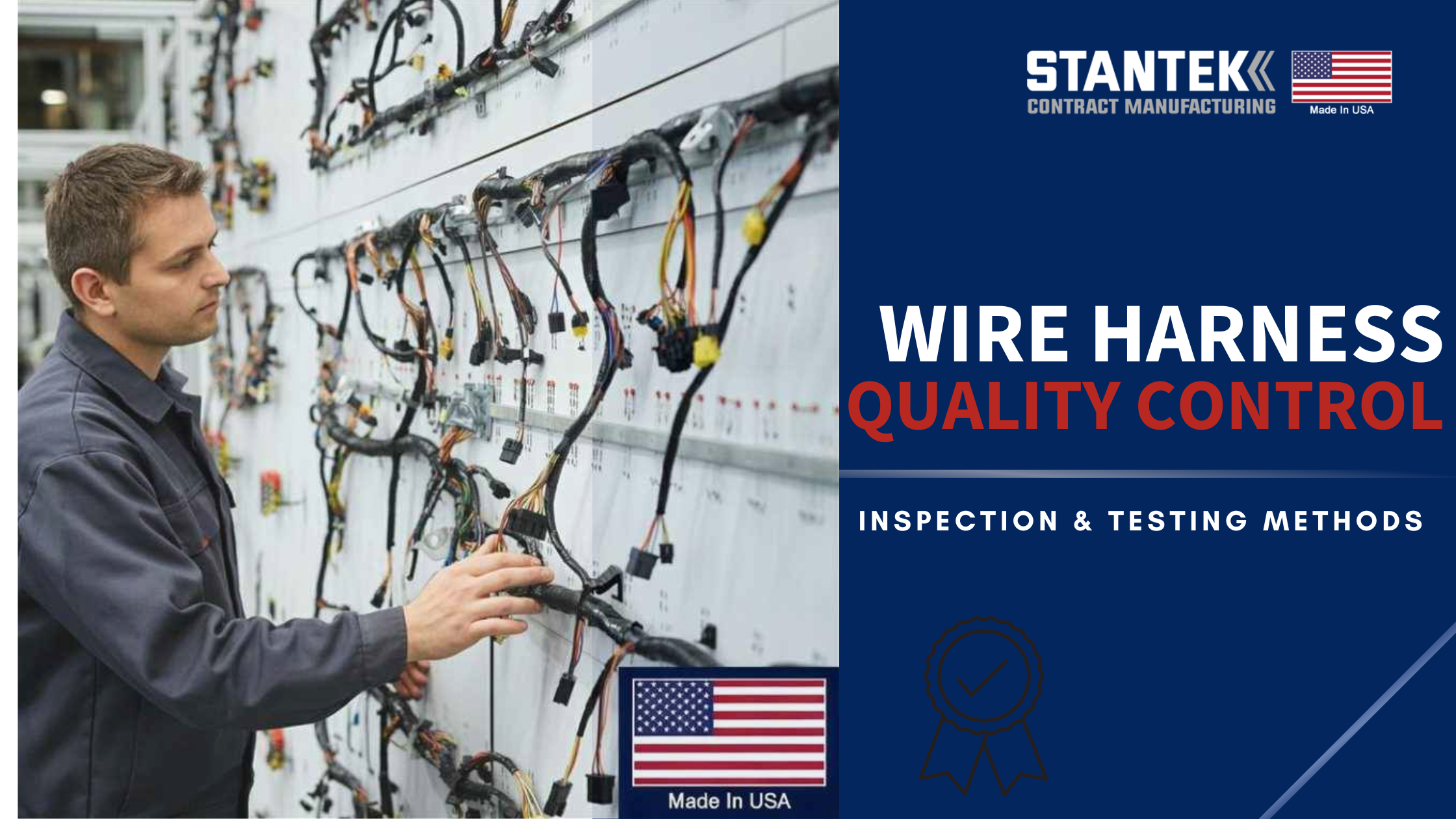
Electrical systems in marine vessels, industrial machinery, heavy equipment, and specialized vehicles depend on reliable wire harness assemblies for consistent power distribution and signal transmission. These assemblies integrate wires, connectors, terminals, and protective components to maintain secure electrical connections in demanding environments. As wire harnesses serve as critical electrical links, even minor assembly defects can affect system performance, reliability, and safety. Manufacturing issues such as incorrect wiring, improper crimping, insulation damage, or connector failures can compromise system performance and reliability. Comprehensive wire harness quality control processes verify assembly accuracy, electrical integrity, and mechanical durability before technicians place the harness into service. This post examines the key inspection methods, electrical testing procedures, and mechanical evaluations used to verify wire harness quality and help ensure reliable operation under demanding conditions.
Wire harness testing combines visual inspection with electrical and, where required, mechanical checks. These methods help verify that the finished assembly meets its drawings, specifications and intended application requirements.
Why Quality Control Is Essential in Wire Harness Manufacturing
Quality control plays a critical role in wire harness manufacturing as it helps identify defects, verify assembly accuracy, and ensure reliable electrical and mechanical performance. The following are some of the key reasons why quality control is essential.
- Preventing Electrical Failures: Electrical defects such as open circuits, incorrect connections, damaged conductors, or poor terminal crimps can affect system performance and cause power failures or signal interruptions. Quality control procedures identify these issues through inspection and electrical testing before technicians integrate harnesses into larger systems.
- Ensuring Consistent Assembly Quality: Wire harnesses include multiple components, including wires, terminals, connectors, seals, and protective coverings, that require precise assembly. Inspection procedures verify proper routing, component placement, and compliance with customer specifications and manufacturing documentation.
- Improving Product Reliability: Wire harnesses operating in demanding environments may experience vibration, moisture, temperature variations, chemicals, and mechanical stress. Quality control testing helps confirm that assemblies maintain electrical integrity and mechanical stability under expected conditions.
- Reducing Maintenance Requirements: Quality control helps identify manufacturing defects before wire harnesses are installed, reducing the likelihood of premature failures that can lead to equipment downtime and maintenance. Reliable harness assemblies support longer service intervals and improved equipment availability.
- Meeting OEM Requirements: OEM buyers often require documented quality procedures to ensure consistent product performance. Inspection records, testing results, and process verification help demonstrate compliance with customer specifications and reliability expectations.
Wire Harness Inspection and Testing Methods Explained
Wire harness quality control involves several inspection and testing methods. Each method checks a different aspect of the finished assembly.
1. Visual Inspection
Visual inspection is one of the first checks performed during wire harness quality control. It helps identify visible defects that may affect the assembly’s appearance, fit or performance.
Inspectors may check:
- Cuts, cracks or damage to wire insulation.
- Incorrectly positioned or damaged connectors.
- Loose terminals or visibly poor connections.
- Incorrect wire routing or bundling.
- Damaged protective sleeves, coverings or insulation.
- Missing labels, markings or identification details
Visual inspection can identify physical issues, but it cannot confirm electrical continuity or detect every internal connection fault. Electrical testing is therefore an important part of the overall verification process.
2. Dimensional and Assembly Inspection
Dimensional inspection checks whether the wire harness matches the required measurements and configuration.
Depending on the assembly requirements, this may include checking:
- Overall harness length.
- Branch lengths and breakout locations.
- Connector orientation and positioning.
- Wire routing and bundling.
- Terminal and connector placement.
- Mounting features and other specified dimensions.
These checks help confirm that the harness can be installed correctly and fits the intended application.
3. Connector and Terminal Connection Inspection
Connectors and terminals are critical points in a wire harness because they establish the electrical connections between wires and components. Incorrect insertion, damaged contacts or an improperly secured terminal can cause intermittent connections or electrical failure.
Connection inspection may include checking terminal position, connector locking features, contact condition and visible signs of damage. Where specified, additional checks can verify that terminals are properly retained and secured.
4. Continuity Testing
Continuity testing checks whether an electrical path exists between the specified points in a wire harness. It helps identify open circuits caused by broken wires, incomplete connections or other interruptions.
During a continuity test, the electrical path between designated terminals or connector pins is checked against the required circuit configuration.
Continuity testing helps to:
- Identify broken or disconnected wires.
- Detect incomplete electrical connections.
- Verify the expected path between connector pins.
- Confirm that specified circuits are connected.
A continuity test confirms that an electrical path exists; it does not, by itself, verify every aspect of electrical performance or insulation integrity. Other tests may be required depending on the application.
5. Insulation Resistance Testing
Insulation resistance testing checks the electrical resistance of the insulating material between conductors or between a conductor and another specified point.
The purpose is to identify insulation conditions that could allow unwanted current leakage.
This test can help detect:
- Damaged or degraded insulation.
- Unwanted electrical leakage paths.
- Insulation problems between specified conductors.
- Potential risks of electrical shorting.
The test conditions and acceptance limits should follow the applicable product specifications and customer requirements.
6. Dielectric Strength Testing
Dielectric strength testing, also known as a hipot test, evaluates whether insulation can withstand a specified test voltage without electrical breakdown.
It is used where required to verify insulation performance under defined test conditions.
Dielectric strength testing is different from continuity testing: continuity checks the intended electrical path, while dielectric testing evaluates the insulating barrier between specified electrical points. The test voltage and procedure must be appropriate for the harness and its requirements.
7. Circuit Verification and Pin-to-Pin Testing
Circuit verification checks whether the wires are connected to the correct terminals and connector pins according to the required wiring diagram or test specification.
Pin-to-pin testing helps verify the intended electrical paths across the harness.
It can help identify:
- Incorrect wire-to-pin connections.
- Reversed or misplaced connections.
- Missing circuit connections.
- Wiring errors between connectors.
- Unintended connections between circuits.
This check is especially useful for multi-branch harnesses and assemblies with several connectors, where a wiring error may not be apparent through visual inspection alone.
8. Short-Circuit Testing
Short-circuit testing helps identify unintended electrical connections between circuits or conductors that should remain electrically separate. A short circuit can affect the operation of connected equipment and may create a risk of component damage.
Testing systems can check for unintended connections between specified points and compare the results against the required circuit configuration.
9. Resistance Testing
Resistance testing measures the electrical resistance of a specified conductor or circuit. It can help identify abnormal resistance that may be associated with poor connections, damaged conductors or other electrical issues.
The expected resistance depends on factors such as conductor material, wire length, wire size and the applicable test requirements. Results should be evaluated against the relevant specifications rather than a universal value.
10. Pull Testing
Pull testing evaluates the mechanical strength of a specified wire-to-terminal or crimp connection. It measures the force required to separate the connection under defined test conditions.
This test can help assess:
- Crimp connection strength.
- Terminal retention.
- Consistency of specified termination methods.
- Compliance with applicable mechanical requirements.
The required force and test method depend on the wire, terminal and applicable specifications.
11. Vibration and Mechanical Durability Testing
Wire harnesses used in equipment, vehicles and industrial applications may experience movement, vibration and repeated mechanical stress.
Where required by the application, vibration and mechanical durability testing can help evaluate whether the harness maintains its required performance under defined conditions.
Testing may assess:
- Connector and terminal stability.
- Wire and insulation condition.
- Resistance to specified vibration exposure.
- Potential damage caused by repeated movement.
These tests are application-dependent and should be performed when required by the customer specification or intended operating environment.
12. Environmental Testing
Some wire harness applications involve exposure to temperature changes, moisture, dust, chemicals or corrosive conditions. Environmental testing may be used to evaluate performance under specified environmental conditions.
Depending on the application, testing may include:
- Temperature cycling.
- Water or dust exposure.
- Salt spray or corrosion testing.
- Other specified environmental exposure tests.
Not every wire harness requires every environmental test. The appropriate tests depend on the operating environment, materials, design requirements and customer specifications.
100% Electrical Testing and Quality Verification at Stantek
At Stantek, every custom wire harness undergoes 100% electrical testing and inspection. This helps verify that each harness meets its required electrical connections and applicable quality requirements before delivery.
Stantek’s electrical testing capabilities include continuity, resistance, short-circuit, insulation-integrity and tensile-strength checks. Testing equipment includes Fluke electrical testing instruments, Cirris testing systems and custom electronic testing systems.
The tests applied to an individual assembly depend on its configuration and customer requirements. This approach helps identify electrical and connection issues and supports consistent verification of finished wire harnesses.
Quality Documentation and Process Verification in Wire Harness Manufacturing
Effective wire harness quality control extends beyond inspection and testing procedures. Proper documentation and process monitoring help manufacturers maintain production consistency, verify compliance with requirements, and support continuous quality improvement throughout the manufacturing process. Manufacturers typically maintain detailed quality records, including:
- Inspection Reports: Inspection reports document the results of visual, dimensional, and assembly inspections performed during production. These records help verify that harness assemblies meet specified design requirements and identify any issues requiring corrective action.
- Electrical Test Records: Electrical testing records provide verification of continuity, insulation resistance, dielectric strength, and other electrical performance checks. These results help confirm that wire harness assemblies meet required electrical specifications before shipment.
- Production Traceability Records: Traceability records track materials, components, production stages, and inspection history associated with each harness assembly. This information supports quality tracking and helps manufacturers quickly identify and address potential production issues.
- Process Verification Data: Process verification data helps ensure that manufacturing procedures are consistently followed. Monitoring assembly processes, testing methods, and quality checkpoints supports repeatable production outcomes and continuous improvement.
Need a Reliable Wire Harness Manufacturing Partner?
The performance and reliability of every wire harness begin with precision manufacturing and rigorous quality control. Stantek provides custom wire harness assemblies for marine, industrial, and heavy equipment applications, combining manufacturing expertise with quality-focused production processes. Contact the Stantek team to discuss your project requirements. We provide initial design support, rapid prototyping, and contract manufacturing of custom wire harness assemblies built to your specifications.
Frequently Asked Questions
What does wire harness continuity testing check?
Wire harness continuity testing checks whether an electrical path exists between specified points in the harness. It helps identify open circuits, broken wires and incomplete connections.
What is the difference between wire harness inspection and electrical testing?
Visual and dimensional inspection checks the physical condition, measurements and assembly details of a wire harness. Electrical testing checks circuit connections and electrical characteristics, such as continuity, resistance and insulation integrity.
Does every wire harness require the same quality tests?
No. The required tests depend on the harness configuration, application, customer specifications and applicable standards. Continuity and other electrical checks may be required, while additional mechanical or environmental tests depend on the intended operating conditions.
Why is 100% electrical testing important for wire harnesses?
100% electrical testing means every harness is subjected to the specified electrical testing rather than relying only on sample checks. It helps identify wiring and connection faults before the assemblies are delivered.
What problems can wire harness testing identify?
Depending on the tests performed, wire harness testing can identify open circuits, short circuits, incorrect pin connections, abnormal resistance, insulation issues and specified mechanical connection problems.