



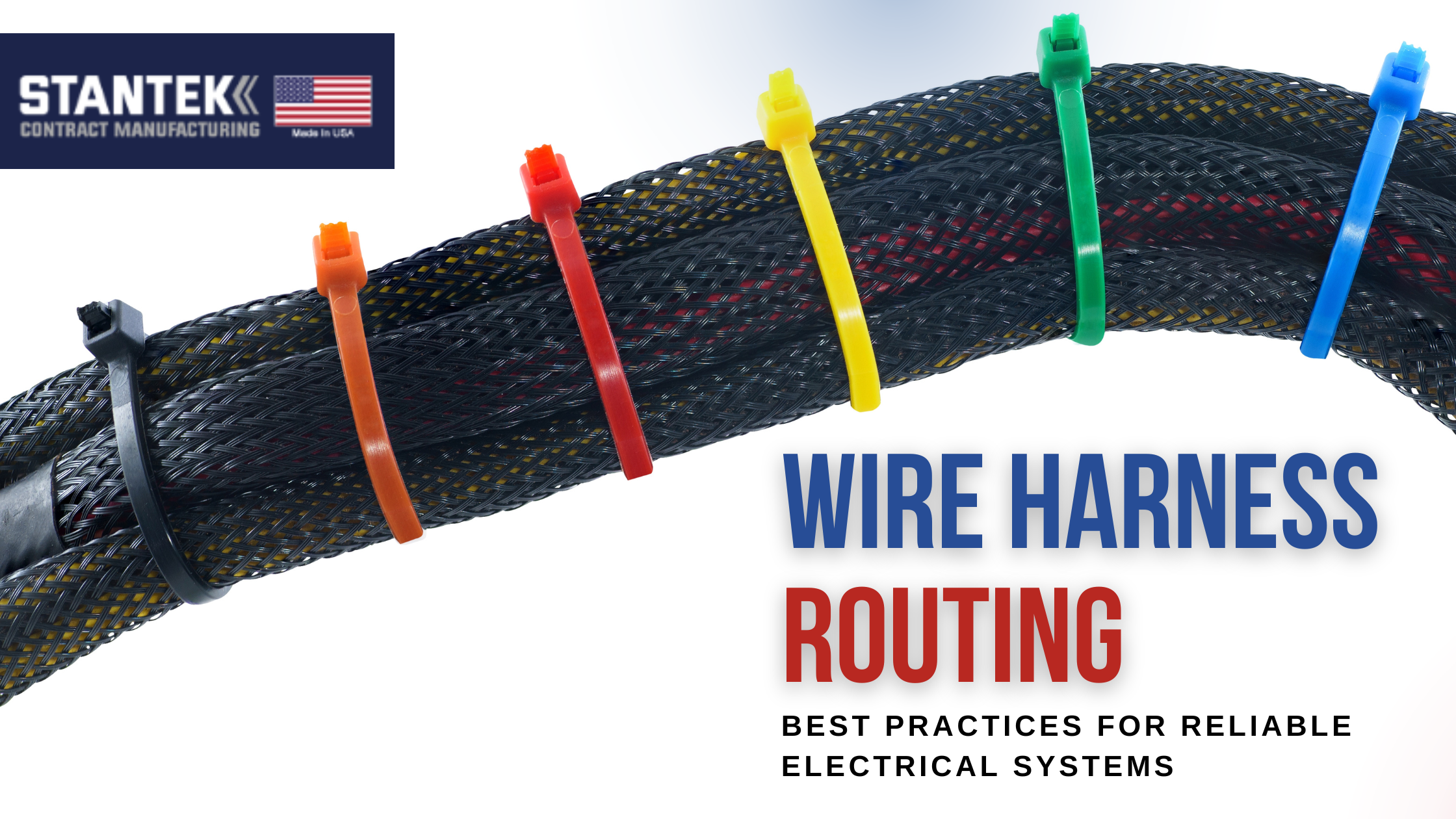
Modern electrical systems are becoming increasingly complex, with equipment integrating larger numbers of circuits, sensors, controllers, and communication networks than ever before. As this complexity grows, proper wire harness routing becomes a critical aspect of system design. Even the most carefully created electrical system can experience performance, installation, or maintenance issues when wiring paths are poorly planned. Wire harness routing refers to the planned path of conductors and associated components throughout an electrical system. As routing decisions influence how electrical assemblies are integrated within a product, they are often established early in the product development process and carried through manufacturing. Effective routing helps support system requirements while simplifying production and long-term service activities. This post examines the importance of wire harness routing, the key steps involved in the routing process, and the best practices that help improve electrical performance, safety, and manufacturability.
What Is Wire Harness Routing?
Wire harness routing is the planned arrangement of wires, connectors, protective coverings, and retention components within an electrical assembly. Proper routing helps protect conductors from heat, vibration, abrasion, and environmental exposure while improving installation efficiency, serviceability, and long-term electrical reliability. Well-planned routing also supports consistent manufacturing and quality inspections.
Why Routing Decisions Matter in Electrical Systems
Wire harness routing affects multiple aspects of an electrical system throughout its lifecycle. While routing is often established to accommodate available space within an assembly, its impact extends beyond physical packaging considerations. Here are some of the key areas influenced by routing decisions:
- Electrical Performance: Routing decisions can influence signal integrity, power distribution, and electromagnetic compatibility. Proper separation of power and signal circuits can help reduce electrical interference and support consistent system performance.
- Reliability and Durability: The routing path determines how conductors and connectors are exposed to operating conditions such as vibration, mechanical movement, temperature fluctuations, and environmental contaminants. Appropriate routing helps reduce wear, minimize stress on electrical connections, and support long-term reliability.
- Safety: Proper wire harness routing helps protect conductors from heat sources, sharp edges, and moving components that could affect electrical integrity. By reducing the potential for insulation damage and electrical faults, effective routing supports safe and reliable equipment operation.
- Installation Efficiency: Well-defined routing paths can simplify assembly procedures, improve installation accuracy, and reduce production time. Clear routing requirements also help minimize assembly errors and support consistent manufacturing outcomes.
- Maintenance Accessibility: Routing strategies that provide access to connectors, junction points, and serviceable components can simplify inspection, troubleshooting, and repair activities. Improved accessibility can help reduce maintenance time and equipment downtime.
- Manufacturing Efficiency: Standardized routing paths contribute to repeatable assembly processes, streamlined quality inspections, and improved production consistency. These factors can help reduce rework and support overall manufacturing efficiency.
Key Steps in the Wire Harness Routing Process
Effective wire harness routing requires a structured approach that considers electrical, mechanical, environmental, and manufacturing requirements. While the process varies by application, wire harness routing generally follows a structured series of steps to support electrical performance, reliability, and manufacturing efficiency.
- Define Electrical Requirements: Identify circuit types, power requirements, signal paths, connector locations, and any shielding or separation requirements that may influence routing decisions.
- Analyze Equipment Layout and Constraints: Review component locations, mounting structures, available space, and mechanical interfaces. This step helps identify routing limitations and establish practical paths for the assembly.
- Establish Primary Routing Paths: Define routing paths between connection points while avoiding interference with nearby electrical and mechanical components. Efficient path selection helps support organized cable management and assembly integration.
- Evaluate Environmental Exposure: Assess areas exposed to heat, moisture, chemicals, vibration, and abrasion. Early identification of environmental risks helps determine where protective measures or routing adjustments may be required.
- Determine Support and Retention Locations: Position clamps, clips, brackets, cable ties, and strain relief features along the routing path. Proper support helps control movement and reduce stress on conductors and connectors.
- Verify Installation and Service Access: Confirm that routing paths provide adequate access to connectors, junction points, and serviceable components. Accessible routing layouts simplify installation, inspection, troubleshooting, and maintenance activities.
- Review Manufacturability: Evaluate the routing plan from a production perspective. Standardized routing paths can simplify assembly, improve repeatability, and support efficient quality inspections.
- Validate Routing Performance: Verify that the routing strategy meets electrical, mechanical, and environmental requirements through routing reviews, prototype evaluations, or testing activities before production.
Best Practices for Effective Wire Harness Routing
Successful wire harness routing requires careful consideration of electrical, mechanical, environmental, and manufacturing requirements. The following best practices help improve the performance, safety, and manufacturability of wire harness assemblies.
- Maintain Proper Bend Radius: The minimum bend radius specified for each wire and cable should be maintained throughout the routing path. Tight bends place mechanical stress on conductors and insulation materials, increasing the risk of fatigue, damage, and reduced assembly life.
- Protect Against Environmental Hazards: Wire harnesses should be routed away from heat, moisture, chemicals, dust, and abrasive surfaces whenever possible. When environmental exposure cannot be avoided, protective components such as sleeving, conduit, grommets, and heat shields help preserve electrical and mechanical integrity.
- Secure Assemblies to Minimize Movement and Vibration: Appropriate clamps, clips, brackets, and cable ties help minimize movement and vibration. Effective retention methods help prevent abrasion, protect connectors, and maintain routing stability during operation.
- Provide Adequate Strain Relief: Strain relief features should be incorporated at connectors, termination points, and areas exposed to repeated movement. Effective strain relief prevents mechanical loads from reaching electrical connections, helping reduce conductor fatigue, connector damage, and premature assembly failures.
- Maintain Separation Between Power and Signal Circuits: Power and signal circuits should be routed separately whenever application requirements permit. Appropriate circuit separation helps reduce electromagnetic interference (EMI), supports signal integrity, and improves electrical performance in systems containing sensitive control and communication circuits.
- Design for Efficient Installation: Routing paths should simplify assembly and provide clear access to connectors and termination points. Straightforward installation procedures help reduce assembly time, minimize errors, and improve production consistency across manufacturing operations.
- Ensure Maintenance Accessibility: Routing layouts should provide adequate access to connectors, junction points, and serviceable components. Accessible assemblies simplify inspection, troubleshooting, and repair activities while helping reduce maintenance time and equipment downtime.
- Optimize Routing for Manufacturability: Routing plans should also consider manufacturing requirements to improve repeatability, streamline quality inspections, reduce rework, and support efficient production across different manufacturing volumes.
Manufacturing Considerations for Wire Harness Routing
Effective wire harness routing contributes to efficient manufacturing as well as reliable electrical performance. Clearly defined routing paths, proper harness bundling, wire identification, and correctly positioned clamps and retainers help improve assembly consistency and reduce production errors. Routing plans should also allow adequate access for inspection and electrical testing while supporting repeatable manufacturing processes. Following recognized workmanship practices, such as IPC/WHMA-A-620 where applicable, helps maintain assembly quality and long-term reliability. Final inspections verify routing accuracy, connector placement, cable retention, and overall harness quality before shipment.
Build-to-Print Wire Harness Manufacturing Support from Stantek
Successful wire harness routing requires careful consideration of electrical performance, environmental conditions, installation requirements, maintenance accessibility, and manufacturing efficiency. Considering these factors early in product development can help improve reliability, simplify assembly, and support long-term system performance.
Stantek supports OEMs with build-to-print manufacturing, initial design support, rapid prototyping, and low-to-mid volume production of custom wire harness assemblies. Our team works closely with customers to manufacture wire harnesses that meet project specifications and quality requirements. Contact our team to discuss your custom wire harness manufacturing requirements and build-to-print production needs.