



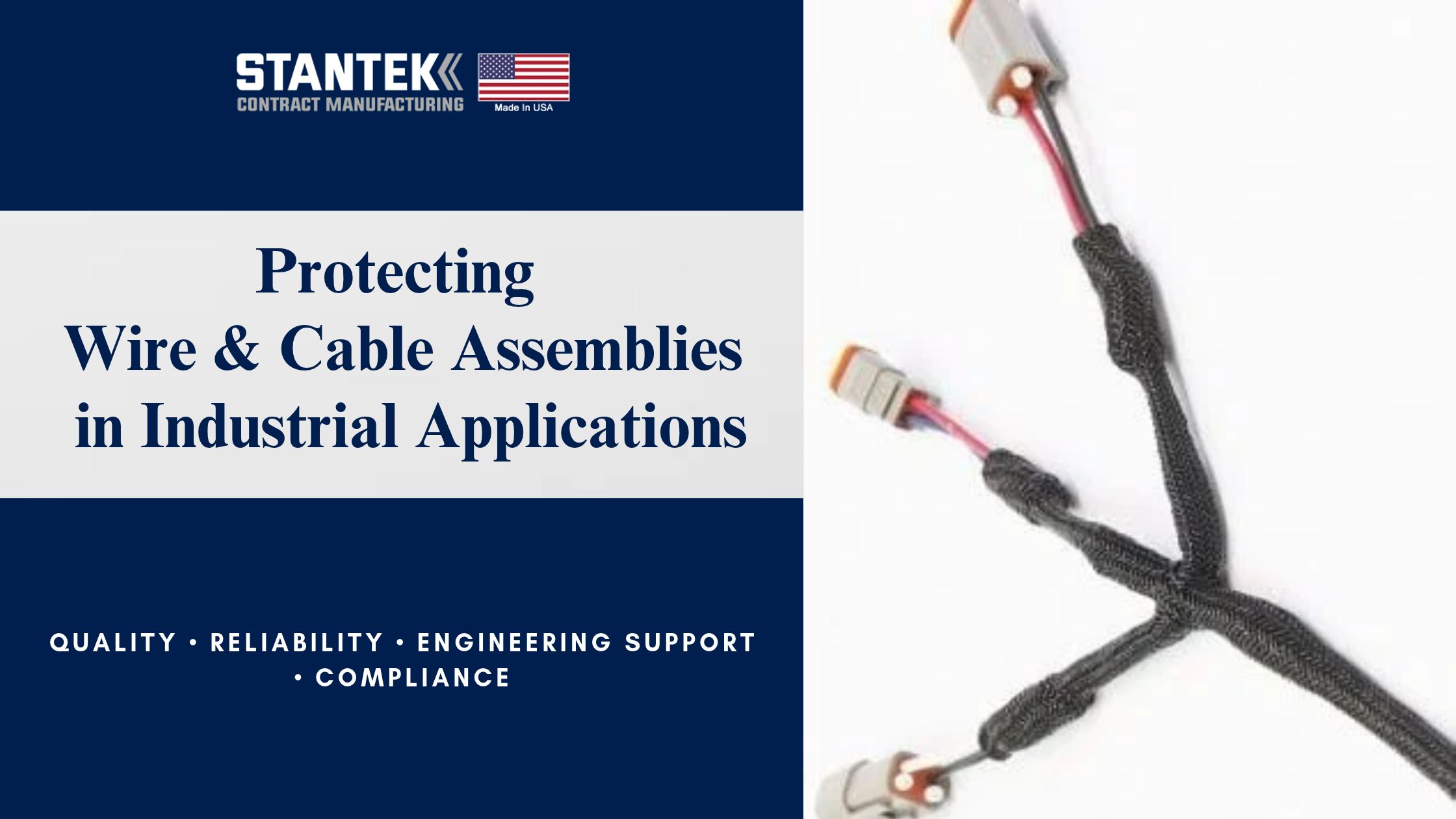
Industrial electrical systems depend on wire and cable assemblies that can withstand more than normal electrical loads. Cables may rub against chassis panels, flex with moving equipment, face high temperatures, or encounter oils, moisture, and cleaning chemicals. Without suitable protection, these conditions can damage insulation and lead to electrical faults, equipment downtime, and warranty issues, making it important for OEMs and system integrators to choose the right protection method. Protection requirements should therefore be considered as part of the overall cable assembly requirements, with the appropriate method selected based on the installation and operating environment. This post discusses some common causes of cable damage, compares widely used protection methods, and explains how to match each option to the application.
Common Causes of Wire and Cable Damage
Wire and cable damage rarely comes from a single source. In industrial equipment, several stresses often occur at the same time.
- Abrasion: Repeated contact with metal edges, chassis panels, brackets, or moving parts can gradually damage the cable jacket. Over time, continuous rubbing can wear through the insulation and expose the conductors. Appropriately specified sleeving or braiding can provide a protective barrier between the cable and surrounding hardware.
- Vibration: Vibration is common in engines, mobile equipment, rotating machinery, and industrial automation systems. Continuous movement can damage insulation, increase mechanical stress, and contribute to fatigue at conductors, terminals, or connections. Flexible protection is often important where a harness must move repeatedly.
- Heat: Motors, engines, heaters, power electronics, and other equipment can expose nearby cables to elevated temperatures. Excessive heat can accelerate insulation aging and reduce service life. Protection must therefore be selected based on the expected temperature range, including potential temperature excursions, not simply the normal operating temperature.
- Chemical Exposure: Industrial cables may encounter oils, fuels, coolants, solvents, and cleaning agents. These substances can affect certain insulation and protective materials over time. Material compatibility should be checked before selecting a sleeving, tubing, or conduit system.
- Moisture and Contaminants: Washdown areas, marine equipment, outdoor machinery, and exposed industrial systems may face water, dust, salt, and other contaminants. Moisture can contribute to corrosion, leakage currents, and short circuits or insulation breakdownif it reaches vulnerable connections.
In practice, these conditions often overlap. A cable may vibrate while exposed to heat and oil, for example. That is why protection selection needs to be based on the actual application rather than a single standard solution.
Wire and Cable Protection Methods
Several protection methods are available for industrial wire harnesses and cable assemblies. Each has a different balance of mechanical protection, flexibility, environmental resistance, accessibility, and installation requirement.
- Braided Sleeving : Braided sleeving is an expandable protective sleeve commonly made from materials such as nylon, polyester, or fiberglass. It surrounds a wire bundle while maintaining flexibility and allowing the assembly to bend during installation or operation.Its main benefits can include abrasion resistance, bundle organization, and relatively easy routing through confined spaces. It can be a practical choice for harnesses that require flexibility and abrasion protection but do not require the impact protection provided by conduit.
- Cable Sleeving: Cable sleeving is a broader category that includes woven, split, and wrap-around styles. These products are useful for grouping multiple conductors and protecting them from general abrasion.Wrap-around and split designs can also simplify installation and repair because technicians can access the cable bundle without disconnecting every termination. This can be useful for assemblies that may require service or modification in the field.
- Heat Shrink Tubing: Heat shrink tubing is a polymer tube that contracts when heated. Once installed correctly, it creates a close-fitting layer around wires, splices, terminals, or cable sections.It is particularly useful for termination protection, strain relief, insulation, and sealing applications when the selected tubing is appropriately rated. Heat shrink is less suitable as the sole solution for long cable runs that experience significant movement because it is not typically intended to provide the same routing and mechanical protection as flexible cable sleeving or conduit
- Conduit: Rigid and flexible conduit provides mechanical protection, with the level of protection depending on the conduit material, construction, and rating. Metal conduit can provide substantial protection from impact, while non-metallic options can offer lower weight and greater flexibility depending on the product. Conduit is commonly used in fixed industrial installations where cables are exposed to physical damage or installation standards require conduit. However, more rigid or heavily protected cable routes can be harder to bend, access, or modify.
- Spiral Wrap: Spiral wrap consists of a spiral-cut tube that wraps around a wire or cable bundle. It provides abrasion protection and bundle management while keeping individual conductors accessible. This can be useful for assemblies that need frequent servicing or branch access. Technicians can generally separate or route individual wires without removing an entire protective sleeve. Spiral wrap is generally better suited to light-to-moderate mechanical exposure than applications involving severe impact or temperatures beyond the product’s rating.
- Braided Shielding for EMI/RFI: Metallic braided shielding uses conductive materials such as tinned copper or stainless steel to help reduce electromagnetic and radio-frequency interference when properly designed and terminated. The braid surrounds the conductors and can form part of the cable’s shielding system when properly terminated. This method can be used in sensor circuits, control wiring, motor-drive applications, and equipment located near switching electronics. Shielding requirements should be considered alongside mechanical protection because a cable may need both EMI control and abrasion resistance.
How to Choose the Right Protection Method
Here are some tips to choose the right protection methods based on your application requirements.
- Identify the Primary Failure Risk: Identify the condition most likely to damage the cable. For example, harnesses exposed to constant movement and flexing may benefit from flexible protection such as appropriately rated braided sleeving, while fixed installations with a high risk of impact may require conduit or another mechanically rated protection method.
- Balance Flexibility and Protection: Consider how much movement the cable assembly requires. Conduit can provide greater mechanical protection than flexible sleeving, depending on its material and rating, but can limit routing flexibility. Braided sleeving provides protection while allowing the cable assembly to flex and route through bends and confined spaces.
- Evaluate Maintenance Requirements: Think about future serviceability. Spiral wrap and certain sleeving options allow technicians to access individual conductors more easily, while heat shrink tubing and conduit may require more extensive disassembly or removal during service, depending on the installation.
- Assess Environmental Conditions: Review the operating environment, including temperature exposure, chemical contact, moisture levels, washdown requirements, and ingress protection need. If cables are installed near motors, drives, or switching electronics, EMI/RFI shielding may also be necessary.
- Consider Layered Protection: Many industrial applications use multiple protection methods together. For example, braided shielding can help reduce electromagnetic interference, while an outer sleeving layer provides abrasion resistance. Combining solutions can address different mechanical and electrical protection requirements within the same cable assembly.
Build Reliability into Your Cable Assemblies from the Start
The right protection strategy can help reduce the risk of damage and unplanned downtime and support cable assembly performance in demanding environments. Selecting protection early in the planning and specification process can help address potential protection requirements before production and installation. For OEMs and system integrators, it is often easier to specify protection during the design stage than to retrofit it after a failure. Stantek can help evaluate protection requirements and incorporate them into custom wire harnesses and cable assemblies. Contact Stantek to discuss your application requirements and develop a cable assembly with protection features suited to its operating environment.
Request a Quote from Stantek to discuss your cable protection and assembly requirements.