



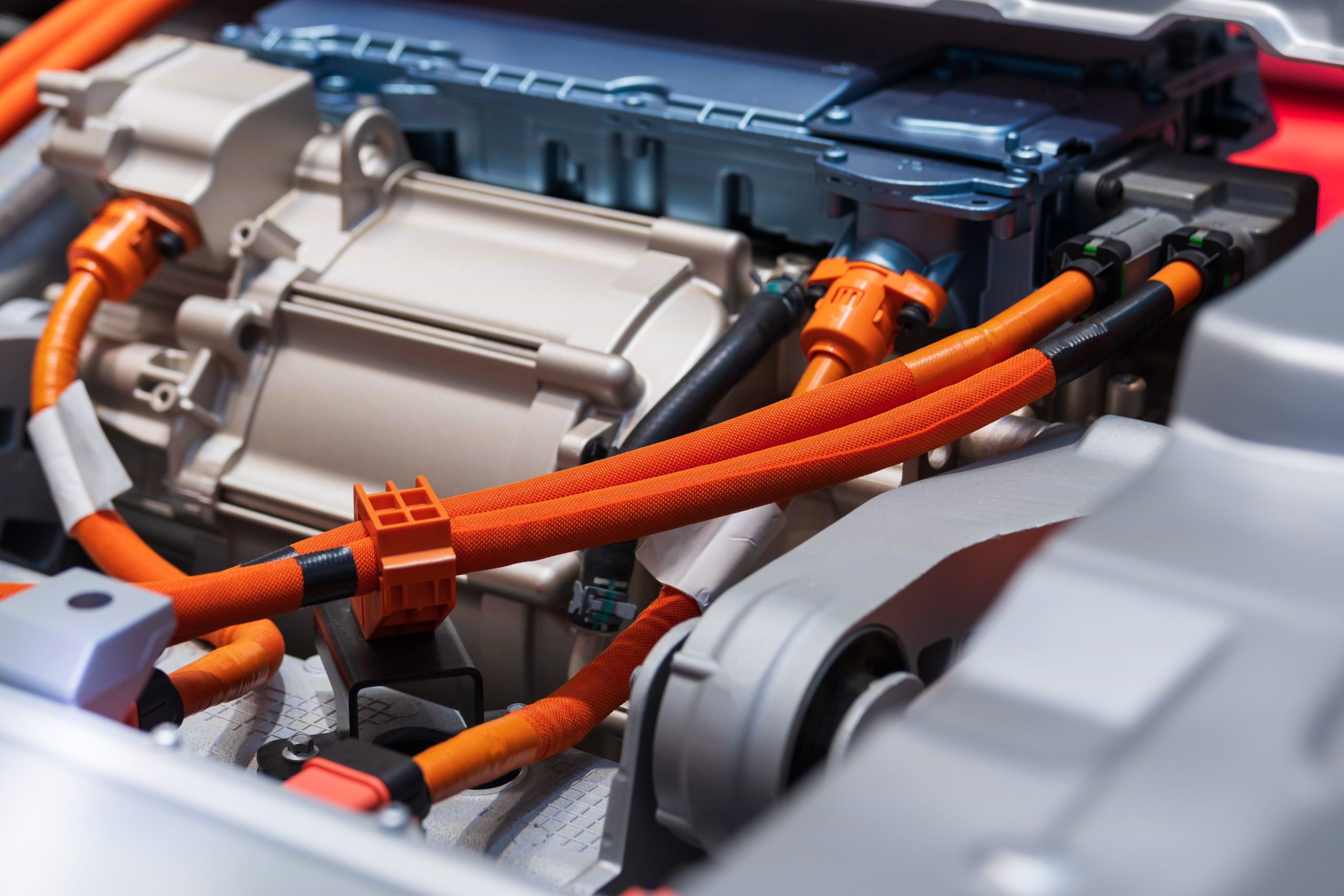
Vehicles rely on increasingly complex electrical systems to power everything from battery management systems and electric drivetrains to sensors, control units, and advanced driver-assistance systems (ADAS). Connecting these components is an extensive network of wire harnesses that must deliver power and signals reliably under demanding operating conditions. Inadequate protection may lead to electrical faults, costly repairs, and premature component failure. Protecting wire harnesses requires more than durable insulation; it involves selecting application-specific materials and appropriate manufacturing processes to address operating conditions. This post explores the key environmental challenges affecting automotive and EV wire harnesses, along with best practices for material selection, protective braiding, and manufacturing to support long-term reliability.
Key Environmental Challenges for Automotive and EV Wire Harnesses
Automotive and EV wire harnesses encounter several environmental and mechanical stresses that can affect their electrical performance and service life. Understanding these challenges helps manufacturers determine the requirements for each application.
- Vibration and Repeated Movement: Engine vibrations, road impacts, chassis movement, and repeated flexing in doors, seats, and liftgates can place continuous stress on wires and connectors. Over time, this mechanical stress may contribute to conductor fatigue, insulation damage, and connector wear, particularly in assemblies exposed to frequent movement.
- High Temperatures and Thermal Cycling: Engine compartments, power electronics, and EV battery and charging systems can expose harnesses to elevated temperatures and repeated heating and cooling. Prolonged thermal exposure may accelerate insulation aging, cause material embrittlement, and affect the long-term performance of protective components.
- Exposure to Fluids and Contaminants: Automotive harnesses may encounter oils, fuels, coolants, cleaning chemicals, moisture, and road salt. Depending on the materials involved and the duration of exposure, these substances can degrade insulation, damage protective coverings, or contribute to corrosion at electrical terminals.
- Electromagnetic Interference (EMI): Electric motors, inverters, and switching power electronics can generate electromagnetic noise that affects nearby electrical circuits. If interference is not adequately controlled, it may disrupt sensitive signals or communication between electronic control systems.
- Mechanical Wear and Abrasion: Harnesses routed near brackets, sharp edges, fasteners, and moving components can experience repeated friction. Continued contact may wear down protective coverings and eventually damage wire insulation, increasing the risk of electrical faults and premature harness failure.
Best Practices for Protecting Automotive and EV Wire Harnesses
Effective wire harness protection starts with matching the protective solution to the application’s operating conditions. The following practices help address environmental risks while maintaining electrical performance, flexibility, and long-term durability.
- Select Protective Materials Based on the Actual Environment: Evaluate the expected temperature range, chemical exposure, abrasion risk, flexibility requirements, and service life before choosing a covering. The selected material should meet the application’s documented requirements while remaining compatible with the harness configuration and installation constraints.
- Consider Braided Sleeving for Abrasion Resistance and Flexibility: Braided sleeving helps protect wire bundles from friction and surface wear while accommodating movement and complex routing. It is useful in chassis assemblies, engine compartments, and moving vehicle components. Consider fiber type, weave density, coverage, and expansion characteristics to achieve the required balance of protection and flexibility.
- Combine Protection Methods Where Necessary: Different hazards may require complementary solutions. Heat-shrink tubing can provide localized insulation and strain relief, while conduits and grommets offer additional physical protection. Heat-resistant sleeves address thermal exposure, and sealed connectors help limit fluid ingress. Dedicated EMI shielding should be specified when required by the application.
- Optimize Harness Routing and Support: Route harnesses away from sharp edges, excessive heat, and moving components wherever possible. Maintain specified bend radii and use suitable clips, clamps, and strain relief to control movement. Proper spacing between harness branches and adjacent components also helps minimize friction and mechanical stress during vehicle operation.
- Validate Protection Before Production: Confirm that the selected materials and finished assemblies meet customer specifications and relevant application requirements. Depending on the intended environment and customer specifications, validation requirements may include abrasion, flex, vibration, thermal cycling, and fluid-compatibility testing. Testing helps identify potential weaknesses before production and supports consistent manufacturing quality.
Choosing the Right Wire Harness Protection Materials
Different protective materials serve different purposes, from mechanical abrasion resistance to thermal protection and electromagnetic shielding. The following comparison highlights their primary benefits and the factors to consider when specifying them.
| Material or method | Primary benefit | Important consideration |
| Nylon or polyester braiding | Abrasion resistance, flexibility, and mechanical protection | Check temperature limits and chemical compatibility |
| Aramid fiber braiding | High tensile strength and mechanical durability | Consider flexibility, cost, and exposure conditions. |
| High-temperature sleeving | Protection against elevated temperatures | Verify the temperature rating and exposure duration. |
| Heat-shrink tubing | Localized insulation, bundling, and strain relief | Match shrink ratio, temperature rating, and sealing requirements to the application. |
| Conduit and protective jackets | Physical protection and separation from surrounding components | Account for available space, bend radius, and installation needs. |
| Foil or conductive braided shielding | Helps control electromagnetic interference (EMI) | Specify suitable coverage, grounding, and termination. |
| Seals, grommets, and over molding | Protection at openings, interfaces, and connection points | Verify fluid compatibility and required sealing performance. |
The final material specification should account for operating conditions, routing constraints, and expected service life. Braided sleeving primarily provides mechanical protection; additional thermal, fluid, or EMI protection should be specified where the application requires it.
How Manufacturing Quality Supports Long-Term Harness Reliability
Even correctly specified materials can underperform if the harness is assembled inconsistently. Manufacturing quality helps ensure that each assembly conforms to customer drawings, electrical specifications, and applicable workmanship criteria.
- Drawing and specification review: Verify harness drawings, routing paths, branch locations, connector positions, and environmental requirements before production begins.
- Consistent braiding and assembly: Maintain the specified braid coverage, positioning, and fit without restricting flexibility or obstructing connector access.
- Secure terminations and strain relief: Ensure electrical connections are assembled correctly, and mechanical stress is appropriately managed at connectors and transition points.
- Electrical inspection and testing: Check continuity, pin-to-pin connections, and other electrical characteristics against customer specifications.
- Application-specific durability validation: Verify that the finished assembly meets applicable customer-specified durability and environmental testing requirements.
- Repeatable production quality: Apply documented work instructions, inspection criteria, and traceability procedures where required.
Consistent workmanship, appropriate inspection, and verification against customer requirements help ensure that finished wire harnesses meet their specified quality and performance criteria.
How Stantek Supports Braided Wire Harness Manufacturing for Demanding Applications
Stantek Contract Manufacturing offers custom braided wire harness manufacturing for applications requiring specific combinations of mechanical protection, flexibility, and durability. Our material and braiding options allow customers to specify configurations suited to their harness requirements and operating conditions. With capabilities that include multi-axis braiding and material options such as nylon, polyester, and aramid, Stantek supports different requirements for mechanical protection, flexibility, and durability. Braid construction and coverage can be selected according to the intended application and customer specifications. Stantek can provide initial design support and manufacturability feedback to help customers evaluate material selection, protective features, and routing requirements based on their application needs.
Depending on project requirements, additional protective methods, including sleeving, environmental sealing, and overmolding, may be incorporated into the assembly. Prototyping, low-to-mid-volume production, and specified inspection or durability verification can support manufacturing requirements. Looking for a custom braided wire harness for a demanding automotive or EV application? Contact Stantek Contract Manufacturing to discuss your project requirements, material options, and manufacturing needs.