



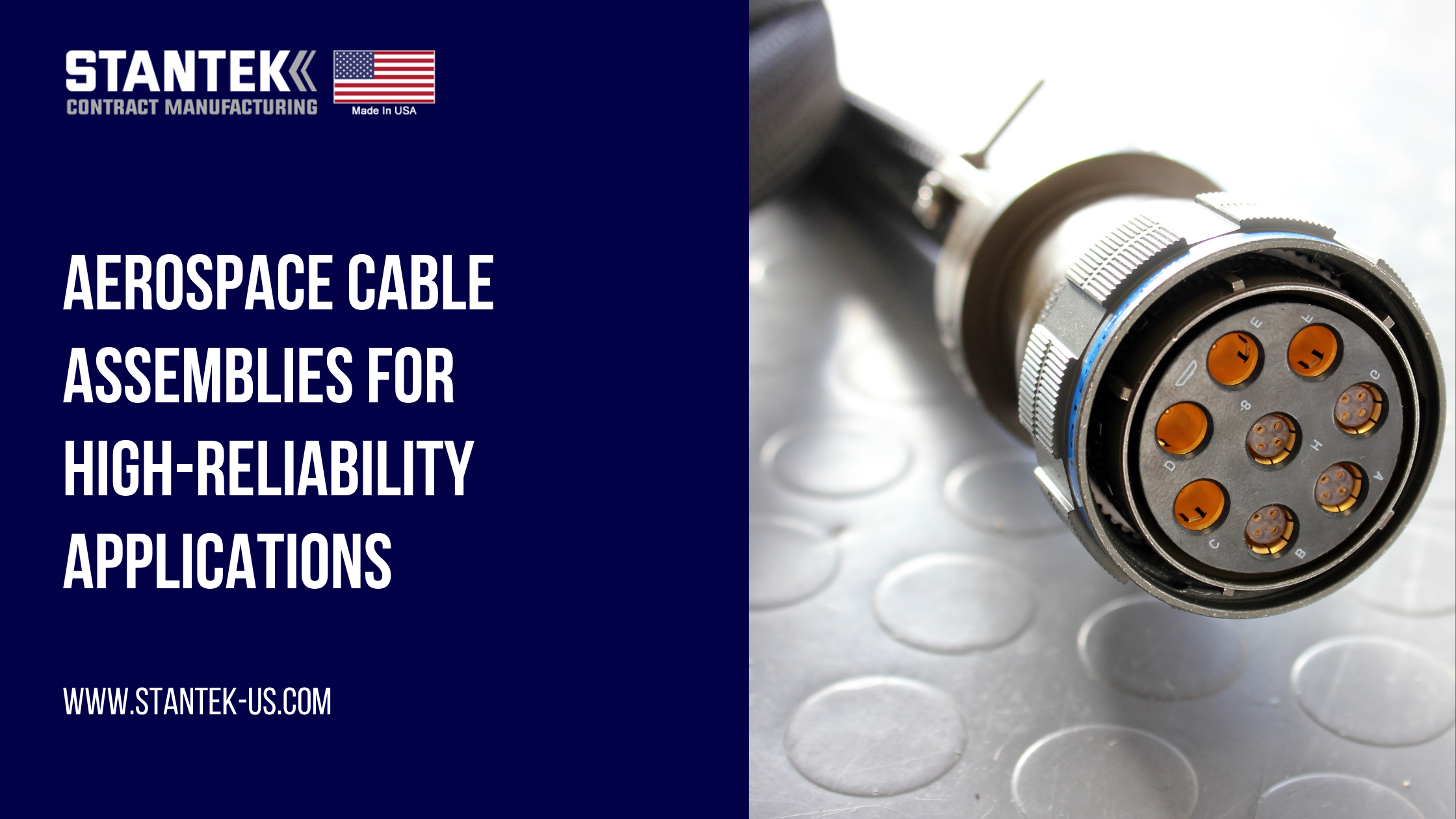
Advanced aerospace systems depend on reliable electrical connectivity to support power distribution, signal transmission, data communication, navigation, flight control, and mission-critical operations. Within these systems, aerospace cable assemblies serve as essential interconnect components that must perform consistently under demanding environmental and operational conditions.
Unlike commercial cable assemblies, aerospace cable assemblies are designed for applications where electrical failures can compromise system performance, safety, or mission success. Aircraft, spacecraft, satellites, unmanned aerial vehicles (UAVs), and defense platforms routinely operate in environments characterized by extreme temperatures, vibration, pressure changes, and electromagnetic interference. As a result, manufacturers must follow highly controlled production processes supported by rigorous quality management systems and comprehensive testing protocols.
This post examines the manufacturing requirements, quality standards, testing methods, and reliability considerations involved in producing aerospace cable assemblies for high-reliability applications.
Operational Demands on Aerospace Cable Assemblies
Aerospace cable assemblies operate in environments that place significant electrical, mechanical, and environmental demands on interconnect systems. These conditions influence material selection, assembly methods, testing requirements, and long-term reliability expectations.
- Extreme Temperature Exposure: Aerospace cable assemblies may be exposed to temperatures ranging from below -55°C to over 200°C depending on the platform, installation location, and mission profile. Repeated thermal cycling can affect insulation stability, conductor performance, and connector integrity, making temperature-resistant materials essential for maintaining long-term reliability.
- Continuous Vibration: Aircraft engines, propulsion systems, and aerodynamic forces generate continuous vibration throughout operation. Without proper cable support, vibration can contribute to conductor fatigue, contact wear, fretting corrosion, and gradual loosening of electrical connections over time.
- Mechanical Shock and Dynamic Loads: Takeoff, landing, turbulence, and deployment events subject cable assemblies to sudden mechanical loads. These forces can stress conductors, connectors, and terminations, requiring robust strain relief systems and controlled routing practices to prevent premature failure.
- Electromagnetic Interference (EMI): Modern aerospace platforms contain numerous electronic systems operating simultaneously. Electromagnetic interference can affect signal quality and data transmission accuracy, making effective shielding, grounding, and cable segregation important considerations during assembly and installation.
- Exposure to Fluids and Chemicals: Cable assemblies may be exposed to fuels, hydraulic fluids, lubricants, de-icing agents, and cleaning chemicals. Insulation and jacketing materials must resist chemical degradation to preserve electrical performance, mechanical strength, and environmental protection throughout service life.
- Moisture and Environmental Contaminants: Humidity, condensation, dust, and airborne contaminants can affect insulation performance and promote corrosion. Environmental sealing, protective coverings, and corrosion-resistant materials help maintain assembly integrity and reduce the risk of performance degradation in service.
Material Selection as the Foundation of Reliability
Customer-specified materials directly influence the electrical performance, environmental resistance, mechanical durability, and service life of aerospace cable assemblies. However, controlled manufacturing processes help ensure these material characteristics are maintained throughout production. Each component must be selected to withstand the demanding conditions encountered throughout the application lifecycle.
- Conductor Materials: High-conductivity copper conductors provide efficient power and signal transmission. Stranded constructions are commonly used to improve flexibility and resistance to vibration-induced fatigue.
- Insulation Materials: Aerospace-grade insulation must maintain dielectric performance under temperature extremes. Materials such as PTFE and ETFE offer excellent thermal, chemical, and mechanical resistance.
- Cable Jacketing: Cable jackets protect conductors and insulation from abrasion, moisture, chemicals, and environmental contaminants. Material selection depends on operating conditions and installation requirements.
- Shielding Components: Braided and foil shields help minimize electromagnetic interference and maintain signal integrity. Shield configuration is selected according to electrical performance and environmental requirements.
- Connector Materials: Aerospace connectors must withstand vibration, temperature fluctuations, and repeated mating cycles, while maintaining environmental sealing and electrical continuity. Corrosion-resistant materials help ensure reliable electrical and mechanical performance over time.
- Contact Materials and Plating: Connector contacts typically use copper alloys with protective plating. Gold plating is commonly specified to reduce contact resistance and improve corrosion resistance.
- Strain Relief and Protective Materials: Strain relief components reduce mechanical stress at termination points. Protective sleeves, heat-shrink materials, and backshells improve durability in demanding operating environments.
In addition to performance considerations, material traceability is a fundamental aerospace requirement. Manufacturers must maintain detailed records that identify material sources, lot numbers, certifications, and inspection results throughout the production process. This traceability supports regulatory compliance, quality assurance, and root-cause analysis when required.
Critical Manufacturing Processes for Aerospace Cable Assemblies
The reliability of aerospace cable assemblies depends on precise, repeatable manufacturing processes. Each production stage must be carefully controlled to ensure electrical performance, mechanical integrity, and compliance with aerospace quality requirements.
- Wire Cutting and Preparation: Conductors are cut to specified lengths and prepared for termination. Dimensional accuracy is essential to ensure proper fit, routing, and assembly consistency.
- Precision Insulation Stripping: Insulation must be removed without nicking or damaging conductor strands. Even minor conductor damage can reduce mechanical strength and long-term reliability.
- Crimp Termination: Crimping creates a mechanical and electrical connection between conductors and contacts. Controlled crimp parameters help ensure consistent conductivity and retention strength.
- Cable Routing and Harness Layout: Wires are routed to maintain proper separation, bend radii, and organization. Correct routing minimizes mechanical stress, abrasion, and helps maintain separation between power and signal circuits where required.
- Strain Relief Installation: Strain relief features protect conductors and terminations from mechanical loading. They help prevent fatigue failures caused by vibration, movement, and repeated flexing.
- Shield Termination: Cable shields must be terminated correctly to maintain grounding continuity and electromagnetic protection. Poor shield termination can reduce EMI shielding effectiveness.
- Cleanliness and FOD Control: Manufacturing areas must minimize contamination and Foreign Object Debris (FOD). Clean assembly practices reduce the risk of defects and operational failures.
- In-Process Inspection: Inspections performed during assembly verify compliance with manufacturing requirements. Early defect detection helps prevent nonconforming products from advancing through production.
- Process Documentation: Detailed work instructions define assembly methods, inspection criteria, and process requirements. Standardized documentation improves repeatability and manufacturing consistency.
Quality Requirements and Industry Standards
Aerospace cable assemblies must meet stringent quality requirements to ensure consistent performance, regulatory compliance, and long-term reliability. Quality assurance relies on standardized systems, controlled processes, and comprehensive documentation throughout the manufacturing lifecycle.
- AS9100 Quality Management Systems: AS9100 establishes requirements for aerospace quality management systems, emphasizing risk-based thinking, process control, corrective actions, continuous improvement, and product conformity across manufacturing operations.
- IPC/WHMA-A-620 Workmanship Standards: IPC/WHMA-A-620 establishes acceptance criteria for cable and wire harness assemblies, defining workmanship requirements for terminations, splices, insulation, routing, and overall assembly quality.
- Material and Process Traceability: Complete traceability links materials, components, production records, and inspection results throughout the manufacturing lifecycle, supporting compliance requirements and facilitating root-cause investigations when necessary.
- Process Validation and Operator Qualification: Critical manufacturing processes must demonstrate repeatable performance through process qualification and validation activities, while trained and qualified operators help ensure consistent workmanship and adherence to documented procedures.
- Inspection, Documentation, and Compliance Verification: Incoming, in-process, and final inspections verify product conformity. Supporting documentation, certifications, and audit records provide objective evidence of compliance with aerospace requirements.
Testing Methods Used to Verify Aerospace Cable Assembly Performance
Testing verifies that aerospace cable assemblies meet electrical, mechanical, and environmental performance requirements before deployment. These verification activities help identify defects, validate manufacturing quality, and reduce the risk of in-service failures.
- Visual and Dimensional Inspection: Inspectors verify workmanship quality, connector installation, wire routing, labeling, and dimensional accuracy to ensure assemblies conform to design specifications and acceptance criteria.
- Continuity and Insulation Resistance Testing: Continuity testing confirms correct electrical connections, while insulation resistance testing identifies leakage paths, insulation defects, and potential short-circuit risks.
- Dielectric Withstand (Hi-Pot) Testing: Hi-Pot testing applies elevated voltage levels to verify insulation integrity and identify weaknesses that could lead to electrical breakdown during operation.
- Mechanical Integrity Testing: Pull-force, connector retention, and strain relief tests verify that terminations and mechanical interfaces can withstand operational loads without degradation or failure.
- Environmental Testing: Temperature cycling, thermal shock, vibration, and humidity testing evaluate assembly performance under conditions representative of aerospace operating environments.
- Functional Performance Testing: Application-specific testing verifies signal transmission, power distribution, and overall electrical performance to confirm assemblies operate as intended within the target system.
Reliability Considerations Across the Product Lifecycle
Reliability is a primary requirement for aerospace cable assemblies, where electrical failures can affect system performance, mission success, or operational safety. Long-term reliability depends on application requirements, material selection, manufacturing consistency, and environmental resilience.
- Material Compatibility and Durability: Customer-specified conductors, insulation materials, connectors, and protective components must withstand temperature extremes, vibration, chemical exposure, and other environmental stresses throughout the intended service life.
- Resistance to Mechanical Stress: Proper routing, strain relief, and cable support help minimize fatigue, abrasion, and termination damage caused by vibration, shock loading, and repeated mechanical movement.
- Signal Integrity and EMI Protection: Effective shielding, grounding, and termination practices help maintain signal quality, reduce electromagnetic interference, and ensure reliable operation of sensitive electronic systems.
- Manufacturing Consistency and Process Control: Repeatable manufacturing processes reduce variability between assemblies, minimizing defects and helping ensure consistent electrical and mechanical performance across production batches.
- Lifecycle Performance and Maintainability: Aerospace cable assemblies must deliver dependable performance over extended service intervals while supporting inspection, maintenance, and replacement activities when required.
Support Your Aerospace Program with a Trusted Manufacturing Partner
Reliable aerospace cable assemblies are the result of controlled manufacturing processes, qualified workmanship, comprehensive testing, and rigorous quality management. Stantek Contract Manufacturing manufactures aerospace cable assemblies and wire harness solutions to customer-provided specifications, supporting aerospace programs with documented production processes, material traceability, and consistent manufacturing quality. Contact our team to discuss your aerospace cable assembly manufacturing requirements.