



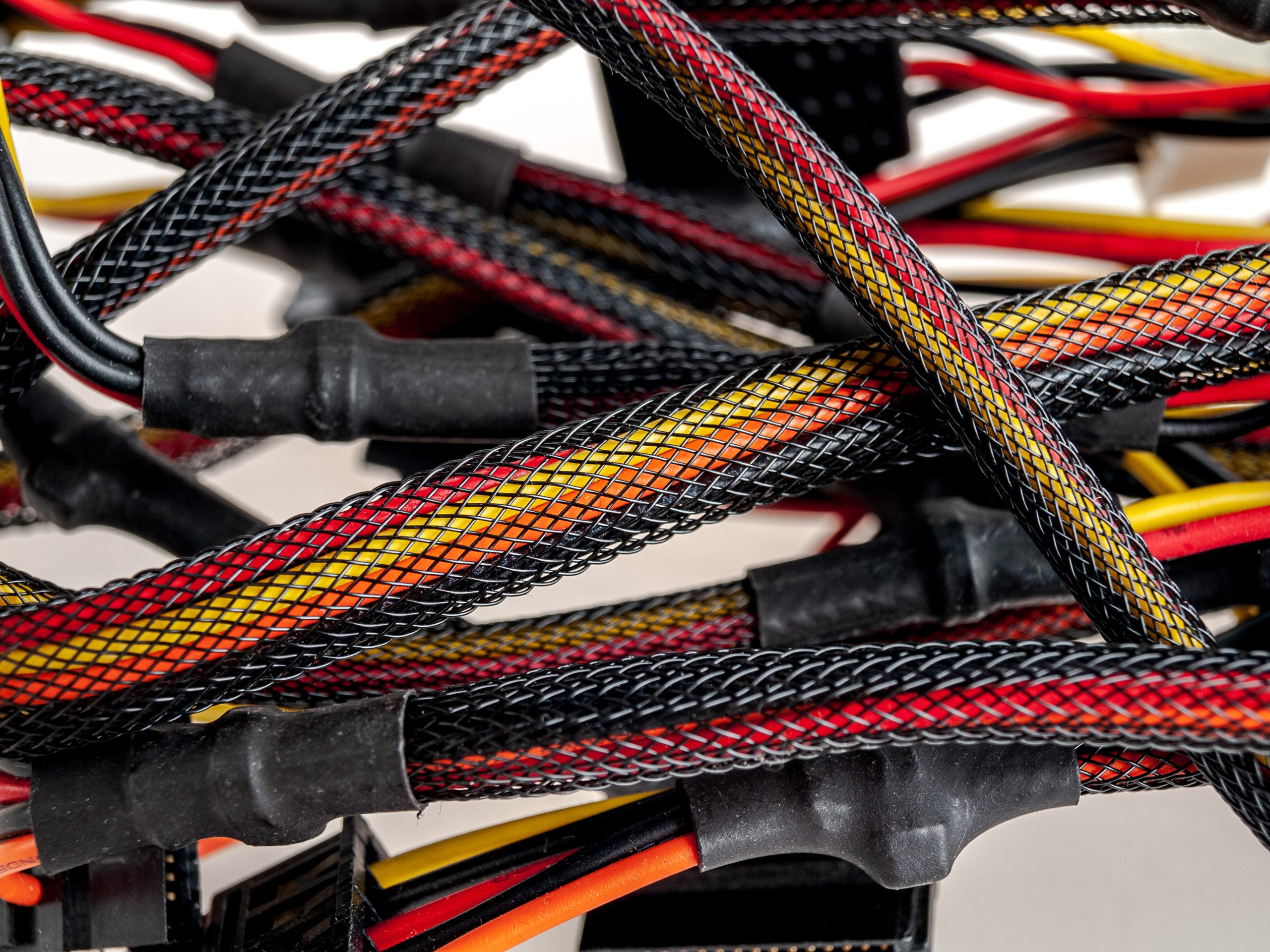
Wires and cables used in industrial equipment, electronics, vehicles, and other systems are often exposed to conditions that can damage insulation, disrupt connections, or shorten service life. Braided sleeving provides a layer of protection by enclosing individual cables or wire bundles within a flexible, woven structure. Depending on the material and construction, braided sleeving can help protect cables from abrasion and mechanical wear, accommodate movement, and provide thermal protection or electromagnetic interference (EMI) shielding when manufactured specifically for those purposes. Available in different materials and configurations, braided sleeving can be incorporated into wire harnesses and cable assemblies to meet specific mechanical, environmental, and electrical protection requirements. This post explores the common types of braided sleeving, their key benefits, factors to consider when selecting a sleeve, and how these solutions can support the protection of wire harnesses and cable assemblies.
Types of Braided Sleeving for Wire and Cable Protection
Braided sleeving is available in different materials and constructions; each suited to cable protection requirements.
- PET Braided Sleeving: Manufactured from braided polyethylene terephthalate (PET) monofilaments, PET sleeving is commonly used for general-purpose cable bundling and abrasion protection. Its expandable construction can conform to individual cables, multi-conductor bundles, and wire harnesses.
- Nylon Braided Sleeving: Made from braided nylon filaments, nylon sleeving provides a flexible protective covering for cables and harnesses. Its suitability for abrasion, environmental exposure, and other mechanical requirements depends on the specific nylon formulation and braid construction.
- High-Temperature Fiber Sleeving: Manufactured using materials such as fiberglass or other heat-resistant fibers, these sleeves are used in applications with elevated thermal requirements. Aramid fibers may also provide high tensile strength and abrasion resistance, depending on the specific material grade and product construction. The appropriate option depends on the material’s temperature rating, exposure duration, and operating conditions.
- Conductive Metal or Metal-Coated Braiding: Made from conductive materials such as bare copper, tinned copper, or suitable metal-coated fibers, this braiding can provide electromagnetic interference (EMI) or radio-frequency interference (RFI) shielding when manufactured with appropriate coverage, bonding, and termination.
- Other Specialized Material Braids: Depending on application requirements, braided sleeving may also be manufactured from specialty fibers or material combinations to provide specific properties, such as enhanced abrasion resistance or chemical compatibility. Suitability should be confirmed against the product specification and operating environment.
Key Benefits of Braided Sleeving for Wire and Cable Protection
Depending on the material and braid construction, braided sleeving offers the following benefits:
- Abrasion and Wear Protection: Braided sleeving helps protect cable jackets and wire insulation from rubbing, scraping, vibration, and repeated contact with surrounding components or surfaces. By providing a sacrificial outer layer, it helps reduce direct wear on the underlying cable insulation during installation and operation.
- Cut and Edge Protection: Suitable heavy-duty or abrasion-resistant sleeving can provide an additional layer of protection where cables pass near panel edges, brackets, openings, or other surfaces that may cause mechanical wear. Where sharp edges or severe cutting risks are present, additional protection or revised cable routing may be necessary.
- Flexibility and Bendability: Braided sleeving can conform to bends, curves, and complex routing paths while maintaining a flexible covering. Expandable constructions can accommodate a range of cable bundle diameters, provided the sleeve is correctly sized for the application.
- Thermal Protection: Specialized high-temperature braided sleeves can help protect cables exposed to elevated temperatures or nearby heat sources. Their suitability depends on the material, product temperature rating, exposure duration, and whether the application involves radiant heat, direct contact, or other forms of thermal exposure.
- Environmental Resistance: Certain braided sleeving materials resist specific environmental factors, such as moisture, oils, chemicals, or UV exposure. Resistance varies by material and product formulation, so compatibility should be verified against the substances and conditions expected in service.
- Cable Bundling and Space-Efficient Routing: Braided sleeving can contain multiple wires or cables within a flexible outer covering, offering a flexible and space-efficient option for cable bundling and routing. This can simplify routing in space-constrained assemblies.
- Improved Cable Durability: By reducing exposure to application-specific mechanical and environmental stresses, appropriately selected braided sleeving can help preserve cable jackets and insulation and support longer service life.
How to Select the Right Braided Sleeving
Selecting braided sleeving requires more than matching the sleeve to the nominal cable diameter. The material, construction, and size should correspond to the mechanical, thermal, electrical, and environmental conditions of the application. Key factors include:
- Cable or Bundle Diameter: Determine the minimum and maximum outside diameter of the cable bundle. For expandable sleeving, verify that the specified diameter range accommodates the cable bundle and that the sleeve can pass over any connectors or components encountered during installation.
- Abrasion and Mechanical Exposure: Consider vibration, repeated movement, contact with surrounding components, and the severity of abrasion the assembly may experience. These conditions influence the required sleeve material and construction.
- Operating Temperature: Check both continuous operating temperature and potential short-term temperature exposure. The sleeving material should be rated for the expected thermal environment.
- Flexibility and Movement: Cable assemblies that bend, flex, or move during operation require sleeving that can follow the required bend and movement without unnecessarily restricting the assembly.
- Environmental Conditions: Identify potential exposure to oils, fuels, chemicals, moisture, UV radiation, and other environmental factors, and select a material with suitable resistance.
- EMI/RFI Requirements: If electromagnetic shielding is required, consider the conductive braid material, braid coverage, frequency range, grounding or bonding method, and termination requirements.
- Installation and Termination: Consider how the sleeving will be installed, cut, secured, and terminated. Connector dimensions, branch points, transitions, available installation space, and the method used to secure the sleeve can all affect the appropriate sleeve size and construction.
Protect Your Wire Harnesses and Cable Assemblies with Stantek
Effective cable protection starts with identifying the operating conditions and protection requirements of the finished assembly. Stantek provides custom wire harnesses and cable assemblies for OEM applications, with braiding and protective sleeving options available to address specific cable protection requirements. Depending on the application, Stantek can integrate braided sleeving into wire harnesses and cable assemblies to help protect against abrasion, movement, heat, and other environmental conditions.
Contact Stantek to discuss your wire harness or cable assembly requirements and determine the appropriate cable protection solution for your application.