



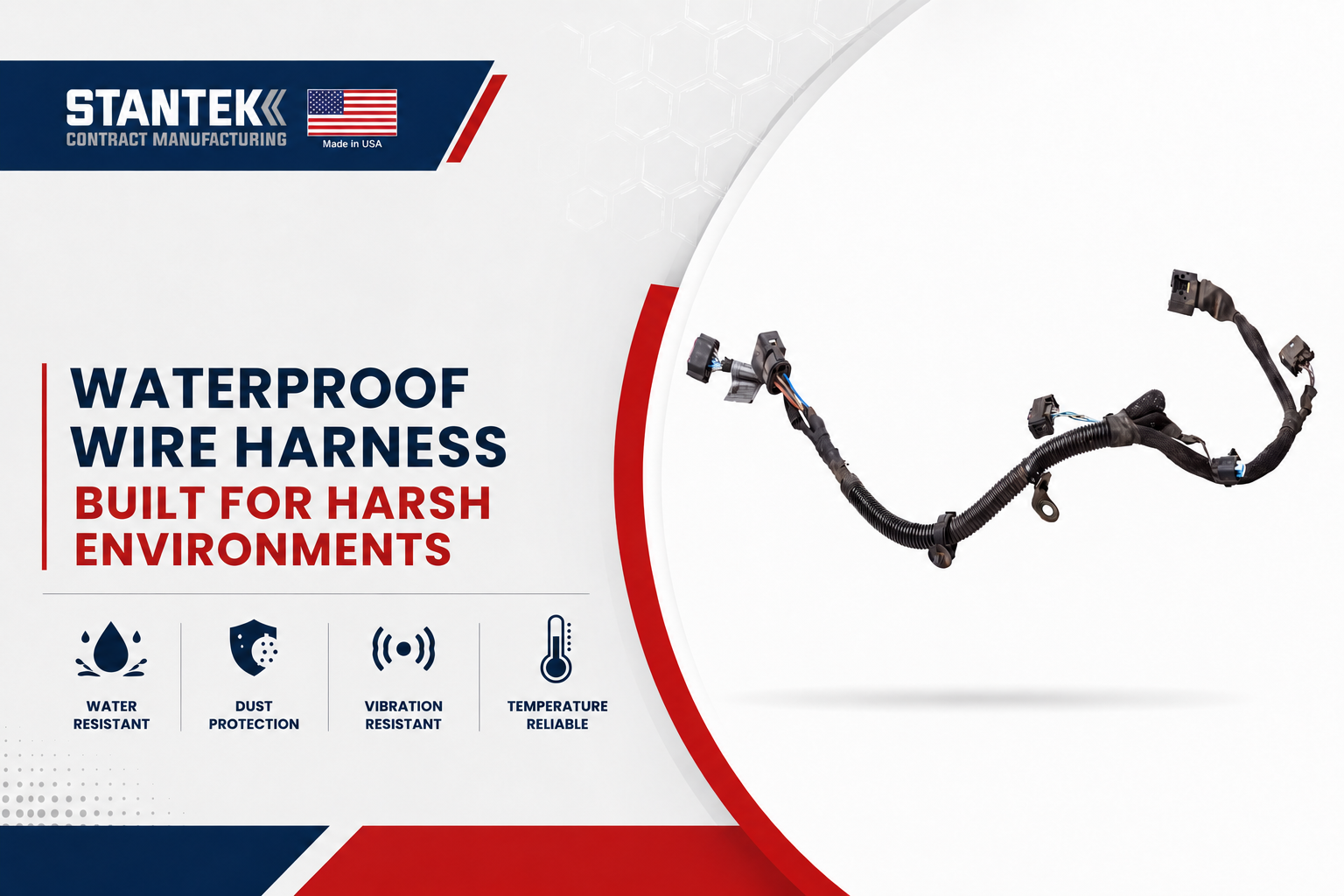
Environmental exposure can significantly affect the performance and service life of electrical systems. Moisture, water, humidity, chemicals, vibration, and temperature changes can create risks for electrical connections and components. A waterproof wire harness helps address these challenges by incorporating sealing and protective features suited to the application’s operating environment.
For OEM equipment used in marine, industrial, automotive, heavy equipment, and other demanding applications, selecting the right waterproof wire harness requires more than simply choosing sealed connectors. Component compatibility, sealing methods, assembly processes, routing, strain relief, and testing all contribute to reliable performance.
What Is a Waterproof Wire Harness?
A waterproof wire harness is a wire harness manufactured with components and protective features that help limit water and moisture from reaching electrical connections. Depending on the application, protection can include sealed connectors, cable seals, heat-shrink tubing, grommets, protective sleeving, and other sealing methods.
The required level of protection depends on the equipment’s environment and operating conditions. Applications exposed to water spray, rain, condensation, washdown, humidity, or temporary water immersion may require different protection levels.
A waterproof wiring harness can incorporate sealing features at connector interfaces and other potential entry points where moisture could reach conductors or terminals. Proper component selection and controlled assembly processes help maintain the intended protection throughout production.
For applications with defined environmental protection requirements, the appropriate protection level should be determined according to expected exposure, operating temperature, mechanical stress, and applicable ingress protection requirements.
Why Waterproof Wire Harnesses Are Critical
Moisture can create several electrical and mechanical problems when it reaches terminals, connectors, or conductors. These problems can include corrosion, electrical leakage, intermittent connections, insulation degradation, and premature component failure.
A properly manufactured waterproof wire harness helps reduce these risks by protecting electrical connection points from environmental exposure. Common environments where waterproof protection may be important include:
- Marine and marine-adjacent equipment exposed to water and salt
- Heavy equipment operating outdoors or in wet conditions
- Industrial machinery exposed to washdown or moisture
- Automotive and transportation equipment exposed to rain and road contaminants
- Outdoor electrical equipment exposed to changing weather conditions
- Equipment operating in humid or condensation-prone environments
The required protection should always match the actual operating environment. A waterproof wire harness intended for occasional water exposure may require a different construction than one used in continuous outdoor or washdown conditions.
Sealing Methods for Waterproof Wire Harnesses
Sealing is one of the most important considerations when manufacturing waterproof wire harnesses. The sealing approach depends on connector construction, environmental exposure, component compatibility, service requirements, and the required level of protection.
Common methods include:
- Sealed Connectors: Sealed connectors use protective seals around terminals and connection interfaces to help prevent water and contaminants from entering the connector.
- Wire Seals: Wire seals help close openings around individual conductors where they enter a connector. Proper seal selection and placement are important for maintaining protection without damaging the wire or terminal.
- Heat-Shrink Tubing: Heat-shrink tubing can provide additional protection around selected connection points and transitions. The correct tubing type, size, and installation process depend on the application.
- Grommets and Sealing Components: Grommets and related sealing components can protect wire pass-through points and help prevent moisture from entering equipment enclosures.
- Protective Sleeving : Protective sleeving can provide additional mechanical and environmental protection. The material should be selected based on temperature, abrasion, chemical exposure, flexibility, and other application requirements.
The appropriate sealing method should be selected based on the complete application rather than relying on a single sealing component. Selecting the sealing approach early in waterproof wire harness manufacturing can help maintain consistent assembly and testing results.
Manufacturing Considerations for a Waterproof Wire Harness
Manufacturing consistency is critical when producing a waterproof wire harness. Small variations in seal placement, terminal preparation, crimping, routing, or connector assembly can affect the finished harness.
A controlled manufacturing process can include:
- Cutting wires to specified lengths
- Stripping insulation without damaging conductors
- Installing the correct seals and components
- Crimping terminals according to applicable requirements
- Assembling sealed connectors
- Applying heat-shrink tubing or other protective materials where specified
- Controlling wire routing and strain relief
- Inspecting connector and seal installation
- Performing electrical testing
- Documenting inspection and test results
Waterproof wire harness manufacturing also requires careful control of component compatibility and assembly processes. Materials should be appropriate for the expected temperature, moisture, chemicals, vibration, and mechanical conditions.
Customer drawings, specifications, approved component information, and testing requirements provide important production references. For OEM programs, a waterproof wire harness manufacturer should be able to review customer drawings, specifications, material requirements, and testing expectations before production.
Following applicable workmanship and quality requirements, including IPC/WHMA-A-620 where specified, helps support consistent production and inspection practices.
Selecting the Right Waterproof Wire Harness
Selecting a perfect wire harness starts with understanding the conditions in which the harness will operate.
Important considerations include:
- Environmental Exposure: Determine whether the harness will encounter rain, splash, washdown, humidity, condensation, immersion, chemicals, saltwater, or other environmental conditions.
- Ingress Protection Requirements: Applications may specify an IP rating such as IP67 or IP68. These ratings define specific levels of protection against solid particles and water ingress under standardized test conditions. The required IP rating should be based on the equipment’s actual operating environment rather than assuming that every waterproof wire harness requires the same protection level.
- Temperature: Operating and storage temperatures can affect seals, insulation, connector materials, and protective components. Materials should be compatible with the expected temperature range.
- Mechanical Conditions: Vibration, movement, bending, abrasion, and strain can affect a harness during operation. Routing, strain relief, protective sleeving, and component selection should account for these conditions.
Connector and Component Compatibility
Connectors, terminals, seals, wire insulation, tubing, and other components must work together as a complete system. Component compatibility is especially important when the harness will face moisture, chemicals, temperature changes, or repeated mechanical movement.
Environmental and Electrical Testing
Testing helps verify that a waterproof wire harness meets specified electrical and environmental requirements.
Depending on the application, testing may include:
- Ingress protection testing: Evaluates resistance to water or moisture penetration according to the applicable requirement.
- Electrical testing: Continuity, insulation resistance, and other specified electrical tests help verify circuit integrity.
- Vibration testing: Evaluates harness and connection performance under specified vibration conditions.
- Thermal cycling: Examines performance through defined temperature changes.
- Salt spray or corrosion testing: May be applicable for environments involving salt or corrosive exposure.
- Mechanical durability testing: Evaluates specified requirements related to movement, bending, or mechanical stress.
The appropriate test program depends on customer specifications, application requirements, applicable standards, and the intended operating environment. Testing should verify the specific performance requirements established for the waterproof wire harness rather than relying on a generic test approach.
Applications for Waterproof Wire Harnesses
Waterproof wire harnesses are used in equipment where electrical connections may encounter moisture or other environmental conditions.
Typical applications include:
- Marine equipment and systems
- Heavy equipment and off-road machinery
- Industrial machinery
- Outdoor equipment
- Automotive and transportation systems
- Agricultural equipment
- Material-handling equipment
- Equipment operating in wet or washdown environments
Each application presents different environmental and mechanical requirements. A custom waterproof wire harness can be manufactured according to customer drawings, specifications, component requirements, and application-specific performance expectations.
Waterproof Wire Harness Manufacturing for OEM Applications
OEMs often require consistent production, controlled processes, and documentation for application-specific harnesses. Stantek provides custom waterproof wire harness manufacturing for OEM requirements, supporting projects from initial manufacturability feedback and prototyping through low-to-mid volume production.
Production can follow customer-provided drawings, specifications, approved components, and defined testing requirements. Stantek’s approach focuses on controlled assembly, inspection, electrical testing, documentation, and traceability to support consistent waterproof wire harness production.
For OEMs looking for a waterproof wire harness manufacturer, selecting a manufacturing partner with appropriate production controls, testing capabilities, and experience with application-specific requirements can help support reliable production.
Contact stantek to discuss your waterproof wire harness requirements, including specifications, environmental conditions, sealing requirements, testing needs, and production volume.