



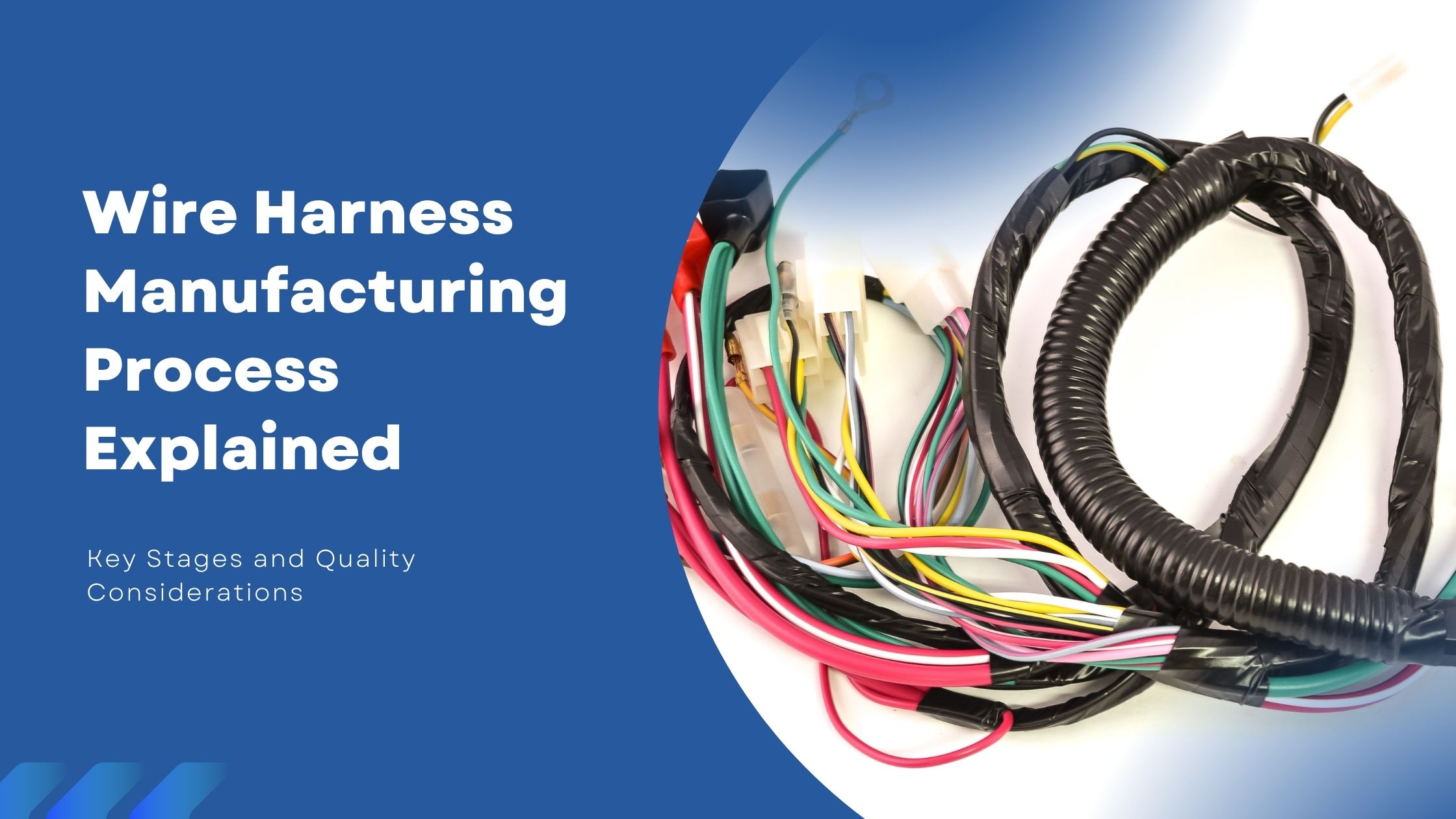
A wire harness is a structured assembly of electrical wires, terminals, connectors, and protective components designed to transmit power and signals efficiently within a system. Instead of loose or disorganized wiring, wire harnesses provide a secure and organized configuration that improves installation, simplifies maintenance, and reduces the risk of electrical failure.
As electrical systems become more compact and complex, the need for consistent wire harness manufacturing becomes increasingly important. The process involves more than bundling wires together. It requires careful material selection, controlled production stages, accurate connections, and quality checks to support long-term electrical and mechanical reliability.
This article explains the key stages of wire harness manufacturing, common production challenges, and the quality considerations that help maintain consistent results.
Key Stages: Wire Harness Manufacturing
The wire harness manufacturing process involves multiple sequential stages, each requiring precision, consistency, and adherence to strict engineering specifications. From initial wire preparation to final inspection, every step contributes to the overall quality and functionality of the harness.
- Requirements Review and Material Preparation: Manufacturing begins with a review of the customer’s specifications, wiring diagrams, connection requirements, and operating conditions. This information helps determine the appropriate wire types, terminals, connectors, and protective materials. Before production begins, incoming components should be checked against the required specifications to identify material or documentation issues early.
- Crimping and Termination: This creates secure electrical and mechanical connections by attaching terminals to wires using controlled force and calibrated tools. The process must meet industry standards to ensure reliability. Poor crimping can result in signal loss, overheating, or system failure.
- Connector Insertion: Connector insertion involves placing terminated wires into connector housings according to design specifications and schematics. Proper pin alignment, color coding, and error-proofing methods help prevent assembly mistakes. Precision in this step is critical for maintaining circuit integrity.
- Routing and Assembly: Routing and assembly organize wires into the required layout using harness boards, while maintaining proper spacing and bend radius. Wires are secured with ties or clamps to ensure stability. This stage improves both functionality and installation efficiency in the wire harness process.
- Protection and Insulation: Protective materials such as braided sleeves, conduits, tapes, and heat shrink tubing are applied to shield the wire harness from environmental factors. These materials help protect against heat, moisture, abrasion, chemicals, vibration, and other conditions that could affect performance or durability.
- Testing and Validation: Testing and validation verify electrical performance through continuity, resistance, and insulation tests, often using automated equipment. This stage helps identify defects before final assembly. Early detection reduces rework and ensures compliance with specifications.
- Quality Inspection: Final quality inspection ensures the completed harness meets all design and quality requirements through visual checks, labeling verification, and dimensional accuracy. Traceability and compliance records are also reviewed. Only approved harnesses proceed to shipment.
Why Precision Matters in Wire Harness Manufacturing
Precision is fundamental to the success of any wire harness process. Maintaining strict control across each stage of the wire harness manufacturing process ensures consistent quality, safety, long-term reliability, optimal functionality, and compliance with engineering specifications. Here are some key reasons why precision is critical in wire harness manufacturing:
- Signal Integrity: Accurate assembly ensures reliable signal transmission by maintaining secure connections and minimizing electrical interference.
- Fault Prevention: Tight tolerances help prevent electrical faults such as short circuits, open connections, and signal inconsistencies.
- Mechanical Strength & Conductivity: Precision in crimping and termination strengthens mechanical retention and ensures stable conductivity over the product lifecycle.
- Stress Reduction: Proper routing and bundling reduce mechanical stress on wires, preventing insulation damage and premature wear.
- Design Fit & Integration: Controlled manufacturing processes enable better fit and integration within compact or high-density system designs.
- Production Consistency: High precision supports consistent quality across production batches, improving repeatability and scalability.
- Cost Efficiency: Reduced variability in manufacturing minimizes rework, material waste, and overall production costs.
- Standards Compliance: Consistent precision ensures compliance with industry standards and customer specifications, supporting audit readiness and acceptance.
Common Challenges in Wire Harness Manufacturing process
Wire harness manufacturing involves multiple complexities due to customization, precision requirements, and strict industry standards. Each challenge can directly impact product quality, consistency, and production efficiency if not properly managed.
- Complex Design Requirements: Wire harnesses are often highly customized, with intricate layouts and varying specifications that make standardization difficult. This increases the need for precise engineering and detailed documentation.
- Manual Assembly Errors: Many stages in the wire harness manufacturing process rely on manual labor, which introduces the risk of human error. Even small mistakes in crimping, routing, or insertion can affect overall performance.
- Consistency across Batches: Maintaining uniform quality across different production runs can be challenging, especially in high-volume or mixed-production environments. Process variation must be carefully controlled.
- Component Availability and Quality: Ensuring a steady supply of high-quality wires, connectors, and terminals is critical. Variations in component quality can lead to performance issues or delays in production.
- Regulatory Compliance: Industries, such as aerospace, medical, and defense require adherence to stringent standards and certifications. Meeting these requirements adds complexity to the manufacturing process.
- Scalability without Compromise: Scaling production while maintaining precision and quality is a key challenge, particularly when transitioning from prototyping to full-scale manufacturing.
Quality Considerations and Process Control in Wire Harness Manufacturing
Maintaining high quality in wire harness manufacturing requires strict adherence to defined process controls, standardized procedures, and recognized industry standards. Effective quality management ensures consistency, reliability, and compliance across every stage of the wire harness manufacturing process.
Critical quality considerations include:
- Standardized Work Instructions: Standardized work instructions and documentation ensure that every step in the manufacturing process is performed consistently and accurately.
- Industry Standards Compliance: Compliance with certifications such as ISO and IPC standards helps maintain industry-approved quality benchmarks and regulatory requirements.
- Real-Time Process Monitoring: Real-time monitoring of crimping and assembly parameters allows manufacturers to detect variations early and maintain process stability.
- Testing: In-process inspections and testing protocols help identify defects during production rather than after completion.
- Material & Batch Traceability: Traceability of materials and production batches ensures accountability and simplifies root cause analysis in case of defects.
- Continuous Process Improvement: Continuous improvement through lean manufacturing practices enhances efficiency, reduces waste, and strengthens overall process control.
How Stantek Supports Wire Harness Manufacturing
A consistent manufacturing process depends on clear requirements, controlled production, and appropriate quality checks. Stantek supports low to mid-volume wire harness manufacturing for customer-specific applications, with a focus on production consistency and meeting defined specifications.
With ISO 9001 certification, ITAR compliance, and DDTC registration, Stantek serves customers with applicable quality and industry requirements. Its wire harness manufacturing capabilities also include 100% electrical testing to help verify completed assemblies.
If your application requires custom wire harness manufacturing, contact Stantek to discuss your specifications, production requirements, and project needs.
Frequently Asked Questions
What is the wire harness manufacturing process?
The wire harness manufacturing process is the sequence of production stages used to create a structured electrical wiring assembly. It typically includes requirements review, material preparation, wire processing, termination, connector insertion, routing, protection, electrical testing, and final inspection.
What are the main stages of wire harness manufacturing?
The main stages include reviewing customer specifications, preparing materials, cutting and stripping wires, attaching terminals, inserting wires into connectors, routing and securing the harness, applying protective materials, testing circuits, and completing final inspection. The exact process depends on the harness configuration and application.
How is quality maintained during wire harness manufacturing?
Quality is maintained through standardized work instructions, controlled production methods, appropriate crimping and termination checks, in-process inspections, electrical testing, material traceability, and final verification against customer specifications.
Why is electrical testing important in wire harness manufacturing?
Electrical testing helps verify that the required circuits are connected correctly and can identify issues such as open circuits, short circuits, and incorrect connections. Testing before shipment helps confirm that the completed harness meets its specified electrical requirements.
What industries use custom wire harness manufacturing?
Custom wire harnesses are used in industries such as industrial automation, aerospace, medical devices, defense, and OEM equipment manufacturing. Each application may have different requirements for electrical performance, environmental protection, documentation, and testing.