



Military Wiring Harness
Rugged wire harness assemblies built for demanding defense applications.
READ MOREStantek is a U.S.-based contract manufacturer specializing in custom wire harnesses built to customer drawings, specifications, and application requirements. A wire harness groups individual wires, terminals, and connectors into an organized assembly to support power distribution, signal transmission, and control connections within equipment and electrical systems.
As a custom wire harness manufacturer, Stantek supports suitable prototype builds and low-to-mid-volume production programs for OEMs and businesses that require consistent assembly construction and dependable electrical connectivity. Our team reviews wire specifications, connector requirements, circuit layouts, and production considerations before manufacturing begins.
Manufactured at our facility in Stanton, Kentucky, Stantek’s custom wiring harness solutions support industrial equipment, transportation systems, aerospace, defense, and other suitable OEM applications.
Different applications require different wire harness configurations. Wire count, circuit arrangement, branch points, connector positions, routing, and protective coverings all influence the assembly configuration. Explore Stantek’s available wire harness categories below to find options relevant to your application.
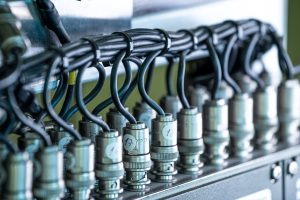
Rugged wire harness assemblies built for demanding defense applications.
READ MOREWire harness manufacturing requires consistent workmanship and verification against the applicable product specifications and customer acceptance criteria.
Stantek maintains an ISO 9001:2015 by Smithers Quality Assessments. View Certificate quality management system through Smithers Quality Assessments. Inspection and verification requirements are established according to the relevant drawings, specifications, and project documentation.
IPC/WHMA-A-620 may apply to cable and wire harness workmanship and acceptance requirements. J-STD-001 may be relevant where soldered electrical assemblies are involved. Applicability depends on the product and contract; neither standard should be interpreted as automatic certification of every wire harness.
Stantek also maintains DDTC registration and ITAR compliance for applicable defense-related work. Customers should identify any program-specific requirements for documentation, traceability, handling, and regulatory compliance when requesting a quotation.
Stantek provides manufacturing capabilities for preparing, identifying, terminating, arranging, and assembling wires according to customer specifications. The processes selected for each project depend on the harness configuration, specified components, production quantity, and acceptance criteria.
Our capabilities include:
Not every process applies to every wire harness. Stantek establishes the manufacturing approach according to the documented requirements and the capabilities available for the project.
Testing and inspection help verify that a wire harness meets the electrical and workmanship requirements defined for the project. The appropriate verification methods depend on the harness configuration, customer specifications, and agreed acceptance criteria.
Depending on the project and available test equipment, verification may include:
Stantek’s custom Cirris testing capability supports applicable electrical verification requirements. Customers should identify required test limits, acceptance criteria, and documentation during the quotation and project review process.
Choosing a wire harness manufacturer involves more than selecting a supplier to assemble wires and connectors. Customers also need clear communication about specifications, component requirements, production quantities, quality expectations, and delivery planning.
Stantek supports suitable customer programs through:
These capabilities help customers establish a defined manufacturing approach for wire harnesses used in their equipment and systems.
Stantek follows the project documentation and agreed production requirements to manufacture each wire harness. The exact sequence depends on the harness layout, component specifications, and required inspection criteria.
The production sequence and verification activities depend on the requirements agreed for each project.
Custom wire harnesses organize electrical connections into defined configurations for equipment and systems requiring multiple wires, connectors, and circuits. Stantek manufactures custom wire harnesses to customer specifications for applicable OEM and industrial applications across the following industries.
Aerospace applications may require wire harnesses for aircraft systems, avionics support equipment, and ground support equipment. These assemblies can incorporate specified wires, connectors, branch points, and protective coverings. Manufacturing follows customer drawings, component specifications, and applicable program requirements.
Defense applications use wire harnesses to connect electrical components across specified equipment and systems. Harness configurations may require defined routing, connector arrangements, shielding, and documentation according to the application. Stantek manufactures assemblies to customer specifications and addresses applicable traceability and regulatory requirements.
Technology equipment may use custom wire harnesses to connect electronic components, control units, communication equipment, and computing hardware. Organized wiring supports defined connection layouts within compact equipment and enclosures. Each assembly is configured according to customer specifications, connector requirements, and the intended application.
Medical equipment may incorporate wire harnesses to connect electrical components in diagnostic devices, laboratory equipment, and other specified systems. Harness assemblies can organize multiple circuits and connectors to support equipment integration. Material selection, documentation, and testing requirements depend on the customer’s specifications and the intended application.
Automotive and related transportation applications use wire harnesses to connect vehicle electronics, sensors, controls, and other electrical components. Assemblies may include multiple branches, connector configurations, and protective coverings to suit the equipment layout. Manufacturing follows the customer’s drawings, specifications, and applicable acceptance criteria.
Marine applications may require wire harnesses for onboard electrical systems, navigation equipment, communication systems, and vessel controls. Depending on the operating environment, specifications may define requirements for insulation, routing, connector selection, and protective coverings. Each harness is manufactured according to the application’s electrical and environmental requirements.
Robotics and automation systems use wire harnesses to connect sensors, actuators, controllers, and other electrical components. Harness layouts may need to accommodate defined routing paths, multiple connection points, and repeated equipment movement. Stantek manufactures assemblies to customer specifications for applicable robotic systems, industrial machinery, and automated production equipment.
The required wire types, conductor sizes, circuit layout, connectors, branch points, protective coverings, and verification methods vary by application. Stantek reviews the applicable specifications and manufacturing requirements during project evaluation and quotation.
Stantek supports suitable prototype, quick-turn, and low-to-mid-volume wire harness programs. An initial build can help clarify assembly requirements and establish the documented configuration before recurring production.
Moving from an initial build to repeat orders depends on specification readiness, component availability, required inspection and testing, production quantities, and the agreed project schedule.
For an initial review, provide the available drawings, wiring diagrams, bills of materials, estimated quantity, and target delivery date. If production details need clarification, Stantek can discuss the requirements and provide initial design consultation or manufacturability feedback.
Clear specifications help a wire harness manufacturer understand the required configuration and prepare an accurate quotation. Include as many of the following details as are available.
Not every project requires every item. If some information is unavailable, share the documentation you have so the outstanding requirements can be identified during the initial review.
Need custom wire harnesses built to your specifications? Contact Stantek to discuss your requirements and request a quote.
Share your available drawings, bill of materials, wire types, connector configurations, required quantities, and target schedule. Our team will review the information provided and identify any additional details needed to evaluate your project. Whether you require prototype wire harnesses or low-to-mid-volume production, Stantek can assess your requirements based on your specifications. Get in touch to discuss your custom wire harness needs.
Request A QuoteA wiring harness is used to organize, protect, and route electrical wires within a system. It ensures reliable power distribution and signal transmission while reducing installation complexity and protecting wires from vibration, heat, and environmental damage.
There are multiple types of wiring harness, including main wiring harness, secondary harnesses, braided harnesses, military-grade harnesses, and custom wire harness assemblies. The exact type depends on application requirements, environment, and system complexity.
Yes, custom wiring harness is designed based on specific requirements such as voltage, environment, routing, connectors, and performance standards. Customization ensures optimal performance, durability, and seamless integration into the final system.
A custom wire harness is designed to simplify installation, improve electrical reliability, and protect wiring from vibration, abrasion, moisture, and harsh operating conditions. Custom wire harness solutions also reduce assembly time, improve maintenance efficiency, and ensure consistent performance across demanding OEM and industrial applications.
A wire harness is an organized assembly of wires, connectors, terminals, and protective coverings designed for a specific electrical application.
Stantek manufactures custom wire harness at our facility in Stanton, Kentucky, USA. We support OEM, industrial, and defense customers with initial design input, rapid prototyping, and low-to-mid volume production. Every custom wire harness is manufactured under strict quality standards and undergoes 100% electrical testing to ensure reliable performance, consistency, and long-term durability.